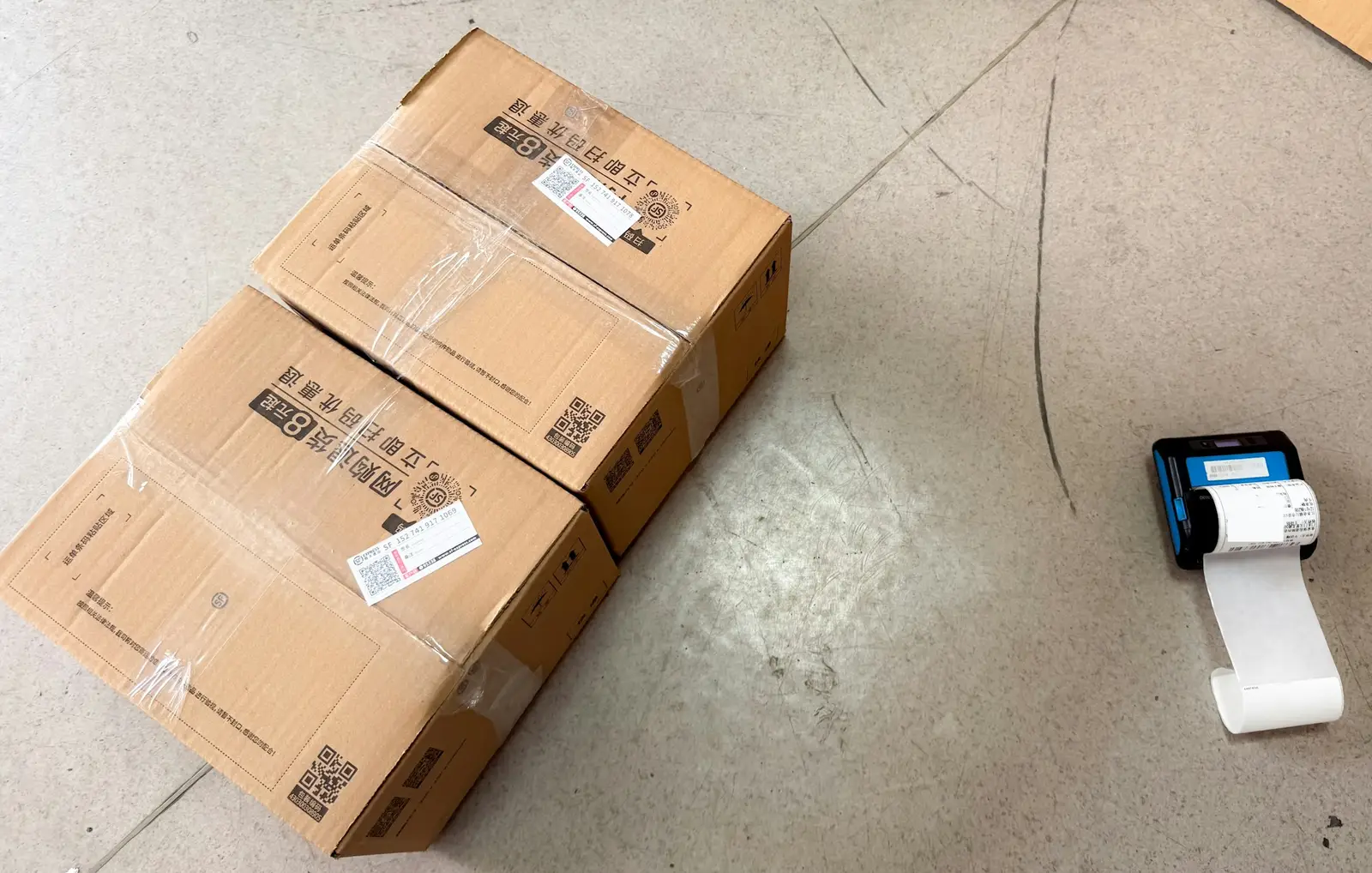
Barcodes and RFID both identify items automatically, but they work in fundamentally different ways and suit different problems. Barcodes are cheap, universal and precise; RFID reads many items at once without line of sight, at a higher cost per item and with more engineering effort. This guide compares the two technologies in practical terms, covers the hardware you will actually buy, and gives you a framework for deciding which one, or which combination, fits your operation.
Key takeaways
- Barcodes need line of sight and are read one at a time. RFID uses radio waves, does not need line of sight and can read many tags in a single pass.
- For most small and mid-sized operations in East Africa, a well-run barcode system delivers the biggest accuracy gains for the lowest cost.
- 2D barcodes (QR, Data Matrix) carry more data than 1D barcodes, including lot and expiry information, and can be read from screens and damaged labels.
- Passive UHF RFID is the standard for retail and logistics. Tags cost cents each at volume, but readers, antennas and integration cost far more than barcode equipment.
- RFID performance depends heavily on materials. Metal and liquids interfere with UHF signals, so pilot with your real products before committing.
How barcodes work
A barcode encodes data in a visual pattern. A scanner illuminates it, captures the reflected pattern and decodes it. Modern handheld devices use imagers (essentially small cameras) rather than lasers, which lets them read both 1D and 2D codes in any orientation.
1D (linear) barcodes
1D barcodes encode data in the widths of bars and spaces. Common symbologies include:
- EAN-13 and UPC-A: retail product identification at point of sale. In Kenya, manufacturers obtain GS1-compliant numbers through GS1 Kenya so that supermarkets can scan their products.
- Code 128: alphanumeric, compact and widely used in warehousing for location labels, licence plate numbers and internal SKUs.
- GS1-128: Code 128 with GS1 application identifiers to encode batch, expiry and serial data on cartons and pallets.
1D codes hold limited data and fail if a section of the barcode is damaged or the label is creased.
2D barcodes
2D barcodes encode data in a grid of cells:
- QR codes: familiar from payments and marketing, and also useful for asset tags and internal labels.
- Data Matrix and GS1 DataMatrix: compact, used for small parts, electronics and pharmaceutical traceability, with built-in error correction so partially damaged codes remain readable.
2D codes can carry far more data, including SKU, lot, expiry and serial number in a single symbol. They require imager-based scanners, which are now standard on enterprise handhelds.
Strengths and limits of barcodes
Barcodes are cheap to produce: a thermal label printer can print location labels, product labels and shipping labels for very little per label. Scanners are mature and reliable, and every ERP, WMS and POS supports them. The limits are physical: each code must be visible and scanned individually, and labels can fade, tear or get dirty.
How RFID works
Radio-frequency identification uses a tag (a chip plus an antenna) and a reader that communicates with it by radio. Tags come in three types:
- Passive: no battery. The tag harvests energy from the reader's signal. This is the type used for inventory.
- Active: battery-powered, long range, more expensive. Used for tracking vehicles, containers and high-value assets.
- Battery-assisted passive: a middle ground, used in niche applications.
RFID also operates in different frequency bands:
| Band | Typical read range | Common use |
|---|---|---|
| Low frequency (LF, around 125 to 134 kHz) | A few centimetres | Access control, animal identification |
| High frequency (HF, 13.56 MHz, including NFC) | A few centimetres to around a metre | Library books, payment cards, access cards, NFC tags |
| Ultra-high frequency (UHF, roughly 860 to 960 MHz) | Several metres for passive tags | Retail, warehousing, logistics, asset tracking |
Passive UHF RFID for inventory
Passive UHF RFID tags follow the EPC Gen2 standard (also published as ISO/IEC 18000-63). Each tag carries an Electronic Product Code that can uniquely identify an individual item, not just a product type. Key characteristics:
- No line of sight needed. A reader can read tags inside cartons and behind other items, within limits.
- Bulk reading. A handheld reader can read many tags per second as an operator walks along a shelf. This is what makes RFID cycle counts dramatically faster than barcode counts for apparel and similar goods.
- Unique serialisation. Each item can have its own identity, which enables item-level tracking.
UHF frequencies are regulated differently around the world; Europe and the United States use different sub-bands. In Kenya, use readers that are type-approved by the Communications Authority of Kenya and configured for the correct regional band.
Read behaviour: what to expect
We avoid quoting universal read-rate percentages because they depend entirely on your products, packaging, tag choice and reader setup. In practice:
- Barcodes achieve very high accuracy when scanned correctly, because each scan is a deliberate, confirmed action. Errors come from missed scans and wrong labels, not from the technology.
- RFID reads can be near-complete for well-tagged items in good conditions, such as clothing on a rail, but drop when tags sit against metal, near liquids, are densely packed or are oriented badly relative to the antenna.
- Stray reads are an RFID-specific problem. A dock door reader may pick up tags from the neighbouring door or a pallet passing nearby. Antenna placement, power tuning and software filtering address this.
- Metal and liquid detune or absorb UHF signals. Special on-metal tags exist, but cost more. Always pilot with real stock.
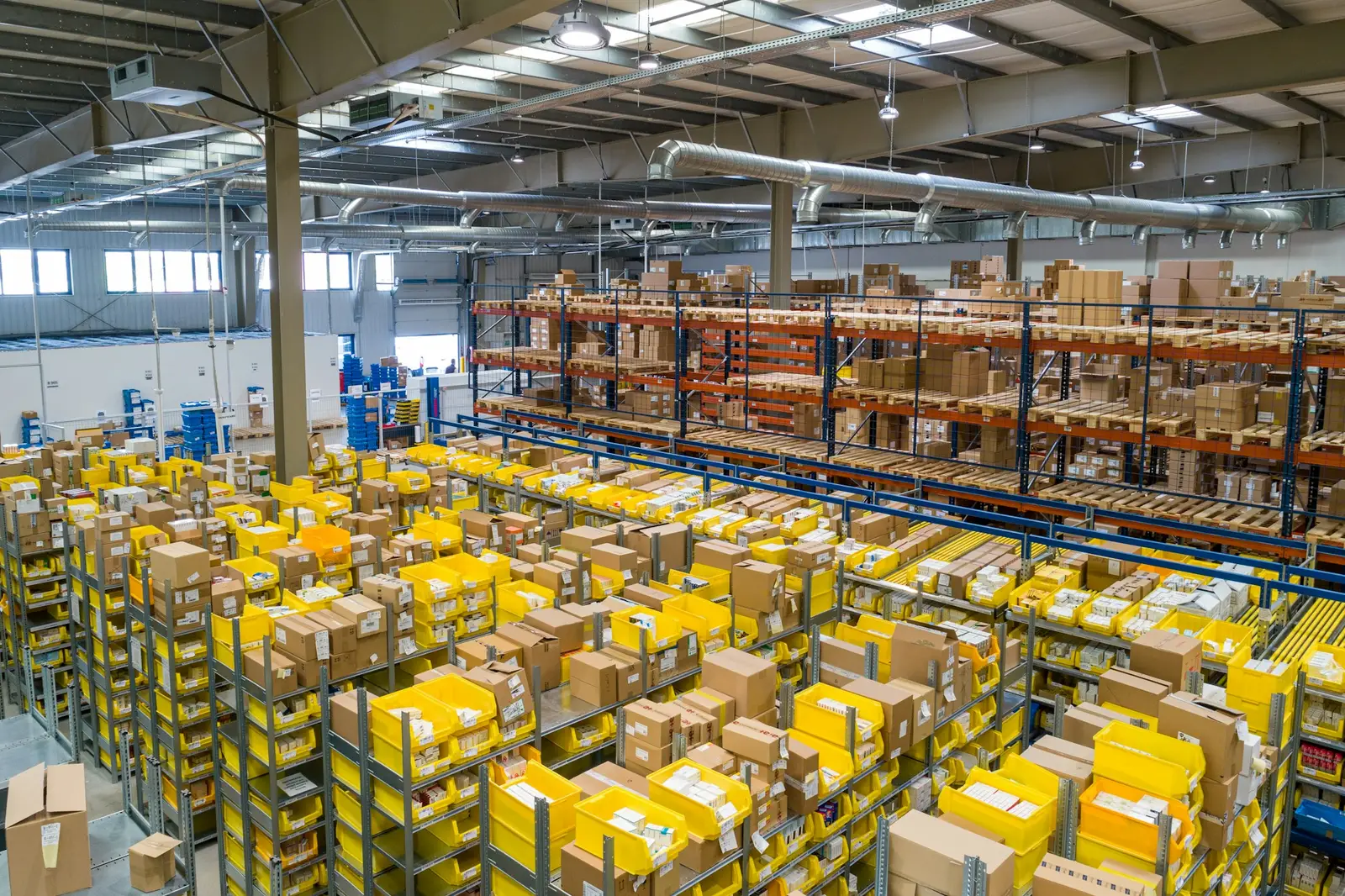 Every bin location in a warehouse like this needs an accurate digital record.
Barcode vs RFID: side-by-side comparison
| Factor | Barcode (1D/2D) | Passive UHF RFID |
|---|---|---|
| Line of sight | Required | Not required |
| Items per scan | One | Many, in a single sweep |
| Typical read range | Contact to a few metres with long-range imagers | Up to several metres with handhelds; more with fixed readers |
| Identity | Usually product type (SKU); can include serial | Unique per item via EPC |
| Tag or label cost | Fractions of a shilling to a few shillings per printed label | Approximately USD 0.05 to 0.20 for standard inlays at volume; on-metal and rugged tags cost more, often over USD 1 |
| Reader hardware | Approximately USD 150 to 600 for a scanner; USD 600 to 2,000 for a rugged mobile computer | Approximately USD 1,500 to 4,000 for a handheld reader or sled; fixed readers plus antennas often several thousand USD per portal |
| Durability | Labels can tear, fade or be obscured | Tags can be embedded and work when dirty, but can be damaged by bending or static |
| Environmental sensitivity | Poor lighting, glare, damaged labels | Metal, liquids, tag density, orientation |
| Integration effort | Low; supported everywhere | Higher; needs middleware, filtering and tuning |
| Best fit | Most warehouses, retail POS, location labels, SMEs | High-SKU apparel, high-value assets, fast cycle counts, dock-door automation |
All prices are approximate at the time of writing, exclude VAT and import duties, and vary widely by volume and supplier. Check current pricing.
Hardware you will actually buy
Barcode hardware
- Corded or cordless handheld scanners for POS and packing stations, from Zebra, Honeywell, Datalogic and others.
- Rugged mobile computers with built-in imagers for warehouse work, such as Zebra's TC series and the MC3300 family, or Honeywell's CT series. They run Android, support WMS apps and survive drops onto concrete.
- Thermal label printers: desktop printers for low volume and industrial printers for high-volume labelling. Use thermal transfer media for labels that must last, such as rack location labels.
RFID hardware
- Handheld RFID readers or sleds that attach to a mobile computer, such as Zebra's RFD40 and RFD90 sleds, which pair with TC-series devices.
- Fixed readers with antennas for dock doors, conveyors and portals.
- RFID printer-encoders that print a label and encode the embedded tag in one pass.
- Tags: labels with embedded inlays for cartons and apparel, hard tags for reusable assets, and on-metal tags for tools, IT equipment and metal containers.
Local supply and support matter. Choose models with authorised distribution and repair capability in Kenya, and keep spare batteries and devices on hand; a dead scanner at peak time stops a shift.
Choosing: a decision checklist
Lean towards barcodes if most of these are true:
- You have fewer than a few thousand SKUs and stock counts are manageable with scanning.
- Your main problem is basic accuracy: unrecorded moves, wrong picks, no location control.
- Budget is tight and hardware must pay back within a year.
- Products include a lot of metal or liquids.
- Suppliers already ship with GS1 barcodes.
Lean towards RFID if most of these are true:
- You hold many individual items of similar appearance, for example apparel in sizes and colours.
- Full stock counts take days and you need them weekly or more often.
- You need item-level traceability or anti-theft visibility.
- You track reusable assets such as returnable crates, IT equipment or tools across sites.
- You can fund a proper pilot, site survey and integration work.
The hybrid approach
Many operations end up using both. A common pattern:
- Barcode labels on every location, which never move and do not need RFID.
- Barcode-based receiving and picking using the existing WMS.
- RFID tags on high-value or high-count items for rapid cycle counts and exit verification.
- RFID-encoded shipping labels that also carry a printed barcode as a fallback.
This keeps cost contained while gaining RFID's counting speed where it matters most.
Scanning at every handover is what turns stock counts into real-time data.
Implementation steps for either technology
- Define the problem in numbers you already have, such as stock discrepancies at the last count, mis-picks reported by customers or hours spent on counts.
- Clean master data and assign barcodes or EPCs systematically.
- Label locations first. Location labels deliver accuracy gains regardless of item technology.
- Pilot in one area with real products, real staff and real Wi-Fi conditions.
- For RFID, run a site survey covering RF interference, antenna placement and tag selection for each product type.
- Integrate with your WMS or ERP so every scan or read updates stock automatically. See how warehouse management systems work for the process side.
- Measure before and after using the same metrics, then decide whether to scale.
Common mistakes
- Buying RFID to fix a process problem. If staff do not record moves today, RFID will not fix discipline issues at locations without readers.
- Choosing tags from a catalogue without testing. Tag performance varies enormously by product and packaging.
- Using consumer phones as scanners. Camera-based scanning is slower and less reliable than dedicated imagers, and the devices do not last.
- Direct thermal labels on racking. They fade with heat and light. Use thermal transfer or durable polyester labels.
- Ignoring Wi-Fi. Both barcode and RFID mobile devices need solid wireless coverage between metal racks.
- Neglecting power. Charging cradles, readers and access points need UPS backup if outages are common at your site.
FAQ
Is RFID more accurate than barcodes?
Not inherently. Barcodes are very accurate when every item and move is scanned. RFID is faster for counting large numbers of items, but read reliability depends on tags, materials and setup. Accuracy ultimately depends on process discipline.
How much does an RFID tag cost?
Standard passive UHF inlays cost roughly USD 0.05 to 0.20 each at volume at the time of writing. Specialised tags for metal surfaces or harsh environments cost more, often above USD 1. Prices vary with volume and supplier.
Can I use RFID on metal products or liquids?
Yes, but you need tags designed for those materials and careful testing. Standard tags often perform poorly on metal and near liquids.
Should a small business start with barcodes or RFID?
Almost always barcodes. They are cheaper, simpler and supported by every inventory system. Our guide to automating inventory management for small businesses covers a barcode-first approach.
Do I need a licence to use RFID in Kenya?
Radio equipment must generally be type-approved by the Communications Authority of Kenya. Buy from suppliers who provide approved equipment configured for the correct band, and check current requirements with the regulator.
How TechBytes can help
We supply and configure barcode scanners, rugged mobile computers, label printers and RFID readers, and we design the warehouse Wi-Fi they depend on. We can run a pilot with your actual products to show whether RFID earns its cost or whether a disciplined barcode system will do the job. Browse hardware in our products catalogue or request a quote for a site assessment.