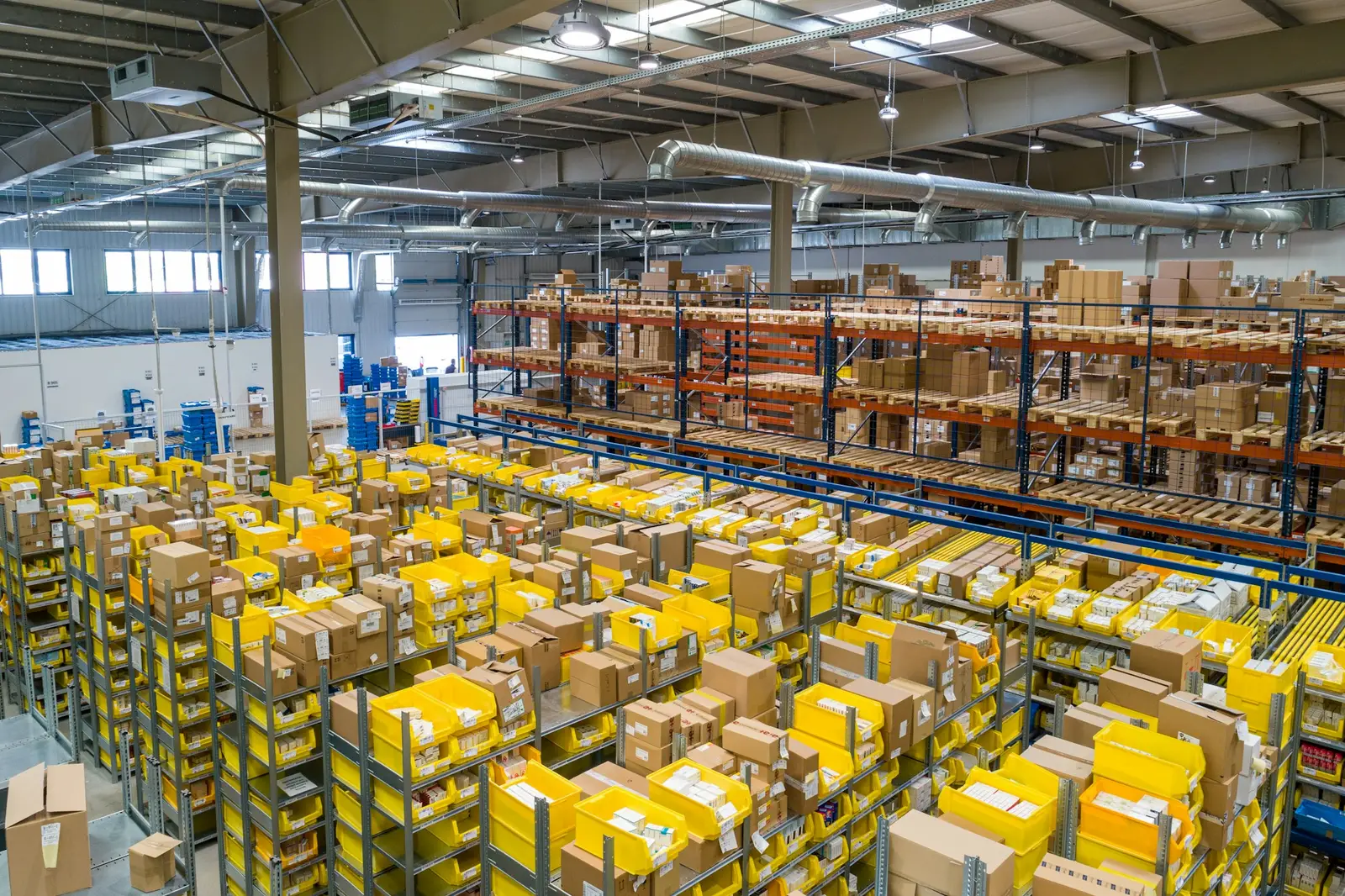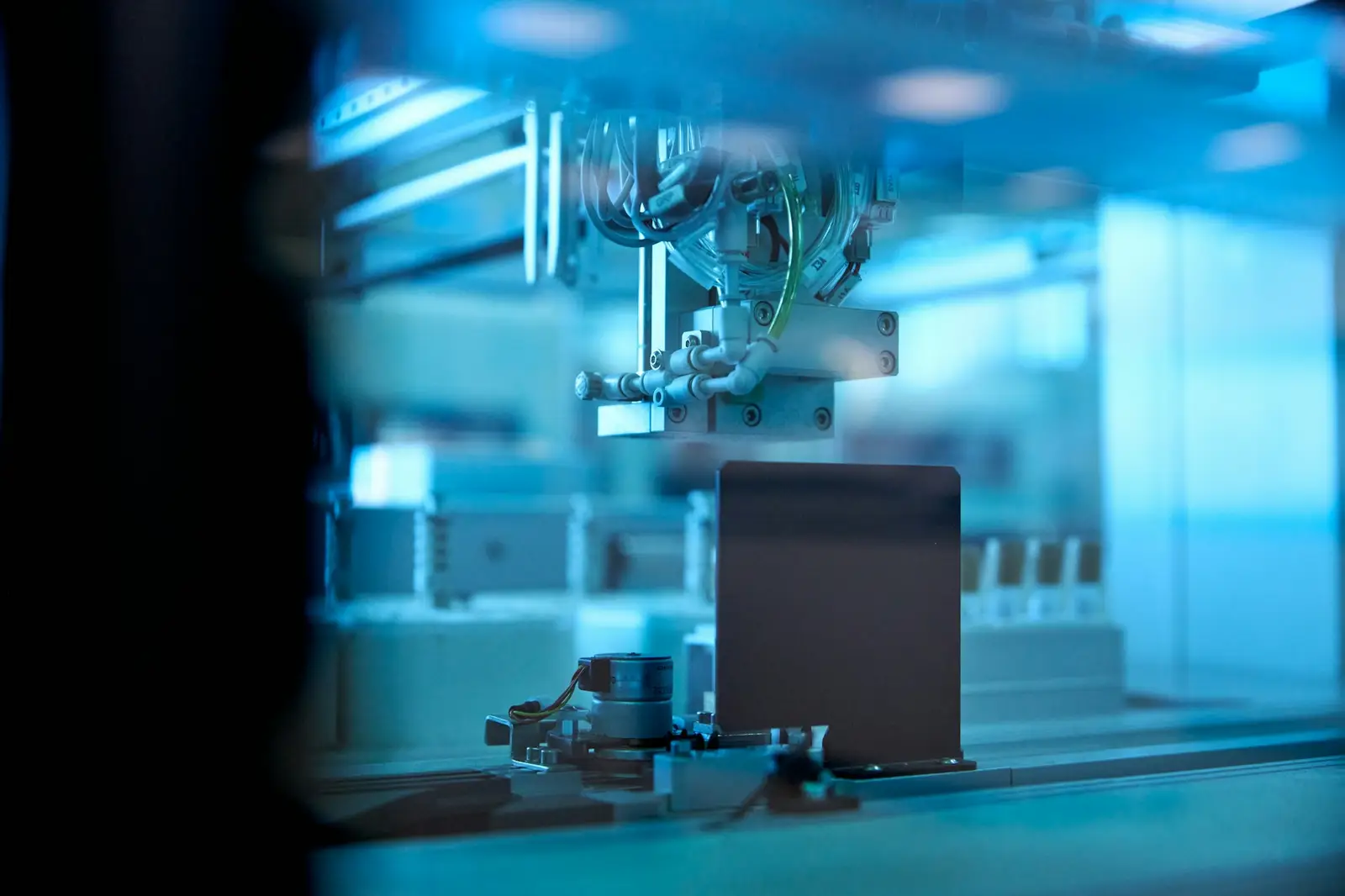
Most people's experience of AI is text on a screen: a chatbot answers a question, a model summarises a document. Physical AI is different. It refers to systems that perceive the real world through sensors, decide what to do, and act on it through motors, grippers, wheels or valves. The stakes are higher because mistakes have physical consequences. This article explains how physical AI systems work, why simulation sits at the centre of modern robotics, what "foundation models for robotics" really means, and how East African organisations can evaluate claims sensibly.
Key takeaways
- Physical AI systems run a continuous perception-planning-action loop under real-time and safety constraints that chatbots never face.
- Simulation and digital twins let teams generate training data and test behaviour safely, but the "sim-to-real gap" means simulated success does not guarantee real-world success.
- Robotics foundation models aim to generalise across tasks and robot bodies; they are a fast-moving research and early-commercial area, so evaluate them on your own tasks.
- Safety layers, deterministic fallbacks and human oversight remain essential regardless of how capable the AI model is.
- For most regional businesses, the near-term opportunity is in narrow, well-defined tasks: inspection, sorting, transport and monitoring.
What makes physical AI different from chatbots
A large language model processes tokens and produces tokens. If it gets an answer wrong, a person reads it and corrects it. A physical AI system faces a harder set of constraints:
| Dimension | Chatbot / text AI | Physical AI |
|---|---|---|
| Input | Text, images, documents | Continuous streams from cameras, LiDAR, force, IMU, encoders |
| Output | Text or structured data | Motor commands, trajectories, actuator signals |
| Timing | Seconds acceptable | Control loops often run many times per second |
| Cost of error | Wrong answer, usually correctable | Collisions, damaged product, injury |
| Environment | Digital, repeatable | Noisy, variable lighting, dust, wear, people |
| Data | Abundant on the internet | Scarce, expensive to collect, robot-specific |
| Compute location | Often cloud | Mostly on-device or edge for latency and reliability |
The last two rows explain much of the field's direction. Robot data is scarce, so researchers lean heavily on simulation. Latency matters, so models must run on or near the machine.
 Robotic welding on an automotive line, where industrial robots are most established today.
The perception-planning-action loop
Every autonomous machine, from a warehouse robot to an agricultural drone, runs a variant of the same loop.
        +--------------------------------------------+
        |                                            |
        v                                            |
  [ PERCEPTION ]  sensors -> state estimate          |
   cameras, LiDAR, depth, force, IMU, encoders       |
        |                                            |
        v                                            |
  [ WORLD MODEL ]  where am I, what is around me,    |
   object poses, map, uncertainty                    |
        |                                            |
        v                                            |
  [ PLANNING ]  task plan -> motion plan -> trajectory
        |                                            |
        v                                            |
  [ CONTROL / ACTION ]  low-level controllers drive  |
   motors at high frequency                          |
        |                                            |
        +--- physical world changes, sensed again ---+

  Safety layer (independent): speed limits, force limits,
  e-stops, geofences. Can override everything above.
Perception
Perception turns raw sensor data into a usable understanding of the scene. Typical tasks include object detection and segmentation, pose estimation (where an object is and how it is oriented in 3D), depth estimation, localisation (where the robot is on its map, often via SLAM: simultaneous localisation and mapping), and sensor fusion that combines cameras, LiDAR, wheel odometry and inertial measurements to reduce uncertainty.
Modern perception relies heavily on deep learning, but production systems often combine learned models with classical geometry and filtering because the latter is predictable and well understood.
Planning
Planning operates at several levels:
- Task planning: what sequence of steps achieves the goal ("open the crate, pick three items, place them in the tote").
- Motion planning: a collision-free path for an arm or vehicle through space.
- Trajectory generation: timing, velocities and accelerations that respect the machine's physical limits.
Language and vision-language models are increasingly used at the task level, translating an instruction into a plan. Motion planning and control usually remain in specialised algorithms or learned policies trained specifically for the robot.
Action and control
Controllers convert planned trajectories into motor commands, correcting continuously for error. Some modern approaches learn "policies" end-to-end that map observations directly to actions, using imitation learning (learning from human demonstrations, often by teleoperation) or reinforcement learning (learning through trial and reward, mostly in simulation).
The independent safety layer
Critical point for buyers: safety functions such as emergency stops, speed and separation monitoring and force limits should not depend on the AI model. They are implemented in safety-rated hardware and software that can override the intelligent layers. When a vendor describes an "AI that keeps people safe", ask which certified safety functions sit underneath it.
Simulation and digital twins
Why simulation matters
Collecting real robot data is slow and expensive. A robot learning to grasp by trial and error in the real world might break objects, wear out its gripper and take weeks to gather enough experience. In simulation, thousands of virtual robots can practise in parallel, faster than real time, with no damage.
Simulation is used for:
- Training reinforcement learning policies and generating synthetic labelled images for perception models.
- Testing software changes against many scenarios before deploying to real machines (a form of regression testing for robots).
- Planning layouts: simulating a warehouse or production line to test robot counts, routes and throughput before buying hardware.
- Operator training without risk to equipment.
Digital twins
A digital twin is a virtual model of a specific physical asset or facility that is kept in sync with real-world data. It goes beyond a generic simulation by reflecting the actual state of your line, machine or building. In manufacturing and logistics, twins are used to test changes ("what if we add a second packing station?"), monitor live conditions, and diagnose issues by replaying events.
The value of a digital twin is proportional to the quality of the data feeding it. A twin built on inaccurate drawings, missing sensor data or outdated layouts will mislead rather than inform. For many East African facilities, the first step is simply getting reliable, time-stamped sensor and production data out of machines and into a historian.
The sim-to-real gap
Policies trained in simulation often perform worse in the real world. This is the sim-to-real gap, and it arises because simulators are imperfect:
- Physics approximations (friction, contact, deformable materials such as fabric, food or plastic film) are hard to model accurately.
- Rendered images differ from real camera images: lighting, glare, dust on lenses, motion blur.
- Real sensors have noise, latency and calibration drift.
- Real actuators have backlash, wear and delays.
Techniques for closing the gap
- Domain randomisation. Vary textures, lighting, friction, masses and camera positions widely in simulation so the model learns to be robust rather than overfitting to one virtual world.
- System identification. Measure the real robot's properties and calibrate the simulator to match.
- Fine-tuning with real data. Train mostly in simulation, then refine with a smaller amount of real-world data.
- Better sensors and controlled environments. Enclosed lighting and fixtures reduce variability, which is often the cheapest way to close the gap in industrial settings.
- Staged deployment. Validate in a test cell, then shadow mode, then supervised operation, then autonomy.
For a buyer, the practical lesson is to ask vendors for evidence of performance in conditions similar to yours: your products, your lighting, your floor, your dust and heat. Demonstrations in a clean lab tell you little about a tea factory or a cement plant.
Foundation models for robotics
What the term means
In language AI, a foundation model is trained on broad data and then adapted to many tasks. Robotics researchers and companies are pursuing the same idea: models trained on large, diverse datasets of robot experience, video and language that can generalise across tasks, objects and sometimes across different robot bodies.
Common categories include:
- Vision-language-action (VLA) models: take camera images and a language instruction as input and output robot actions.
- World models: learn to predict how the environment will change in response to actions, which helps with planning and with generating training data.
- Generalist perception models: open-vocabulary detection and segmentation that recognise objects without being trained on each specific item.
Several large technology companies, robotics start-ups and university labs publish research in this area, and some open datasets and models are available. The field is moving quickly, so specific capability claims date fast.
How to think about them today
- They are most promising for tasks with high variety: many different items, frequent changes, unstructured settings.
- They are less necessary for narrow, repetitive tasks where traditional automation or a single-purpose vision model is cheaper, faster and more predictable.
- Reliability in production, not demo success, is the real test. Ask for failure rates, recovery behaviour and how the system handles items it has never seen.
- Compute requirements can be significant. Check whether inference runs on the robot, an on-site edge server or a remote cloud, and what happens when connectivity drops. Round-trips from Nairobi to cloud regions in South Africa, Europe or the Middle East add latency that real-time control cannot tolerate.
Most automation projects start small: one cell, one task, measured carefully.
Where physical AI is useful in East Africa now
Practical, near-term applications tend to be narrow and well-scoped:
- Agriculture: produce grading and sorting, drone-based crop monitoring and spraying (subject to Kenya Civil Aviation Authority regulations), and greenhouse monitoring in horticulture.
- Manufacturing: vision inspection, cobot palletising and machine tending. See How AI-Powered Robots Are Transforming Manufacturing.
- Logistics: autonomous mobile robots for internal transport and goods-to-person picking. See The Future of Robotics in Warehousing.
- Infrastructure inspection: drones and crawlers for telecom masts, power lines, solar farms and pipelines.
- Security and facilities: autonomous patrol and monitoring, with careful attention to the Kenya Data Protection Act 2019 where cameras capture people.
Evaluating a physical AI proposal
Use these steps before committing budget:
- Define the task precisely, including variation: item types, sizes, weights, presentation, cycle time and acceptable error rate.
- Ask where each part of the loop runs: perception, planning and control on device, edge or cloud.
- Request evidence in comparable conditions, ideally a trial on your own products and premises.
- Identify the safety architecture and relevant certifications independent of the AI.
- Clarify data ownership: who owns images, maps and operational data, where they are stored, and how they are protected under Kenyan law.
- Plan for model updates: how new products are added, who retrains models and how changes are validated.
- Confirm local support: engineers, spares and response times in your country.
Common mistakes
- Equating a demo with deployment. Short demonstrations in controlled conditions hide the long tail of edge cases.
- Over-trusting simulation results. Always validate on real hardware in real conditions.
- Letting AI own safety. Safety must be deterministic and certified.
- Ignoring data infrastructure. Without reliable sensors, timestamps and storage, there is nothing to train or twin.
- Choosing a generalist model for a narrow task. If a simple, single-purpose solution works, it is usually cheaper and easier to maintain.
FAQ
What is physical AI in simple terms?
It is AI that senses and acts in the physical world through machines such as robots, vehicles and drones, rather than only producing text or images on a screen.
Is a digital twin the same as a simulation?
Not exactly. A simulation models how a generic system behaves. A digital twin represents a specific real asset or facility and stays updated with its live data.
What is the sim-to-real gap?
It is the drop in performance when a model trained in simulation is deployed on a real robot, caused by differences in physics, sensors and environment between the virtual and real worlds.
Can physical AI run without internet connectivity?
It should, for anything time-critical or safety-related. Perception and control generally run on the device or on-site edge hardware, with cloud connectivity used for updates, monitoring and training.
Are robotics foundation models ready for production?
Some capabilities are entering commercial products, but the field is early and changing quickly. Evaluate on your own tasks, measure failure rates and keep deterministic safety layers in place.
How TechBytes can help
We help organisations separate realistic physical AI opportunities from hype, starting with the data and infrastructure that every autonomous system depends on: sensors, edge compute, segmented networks and secure storage. Our team can assess a vendor proposal, design the supporting architecture, or build data pipelines that make simulation and digital twins meaningful. Learn more about our AI and automation services or technology consultancy.