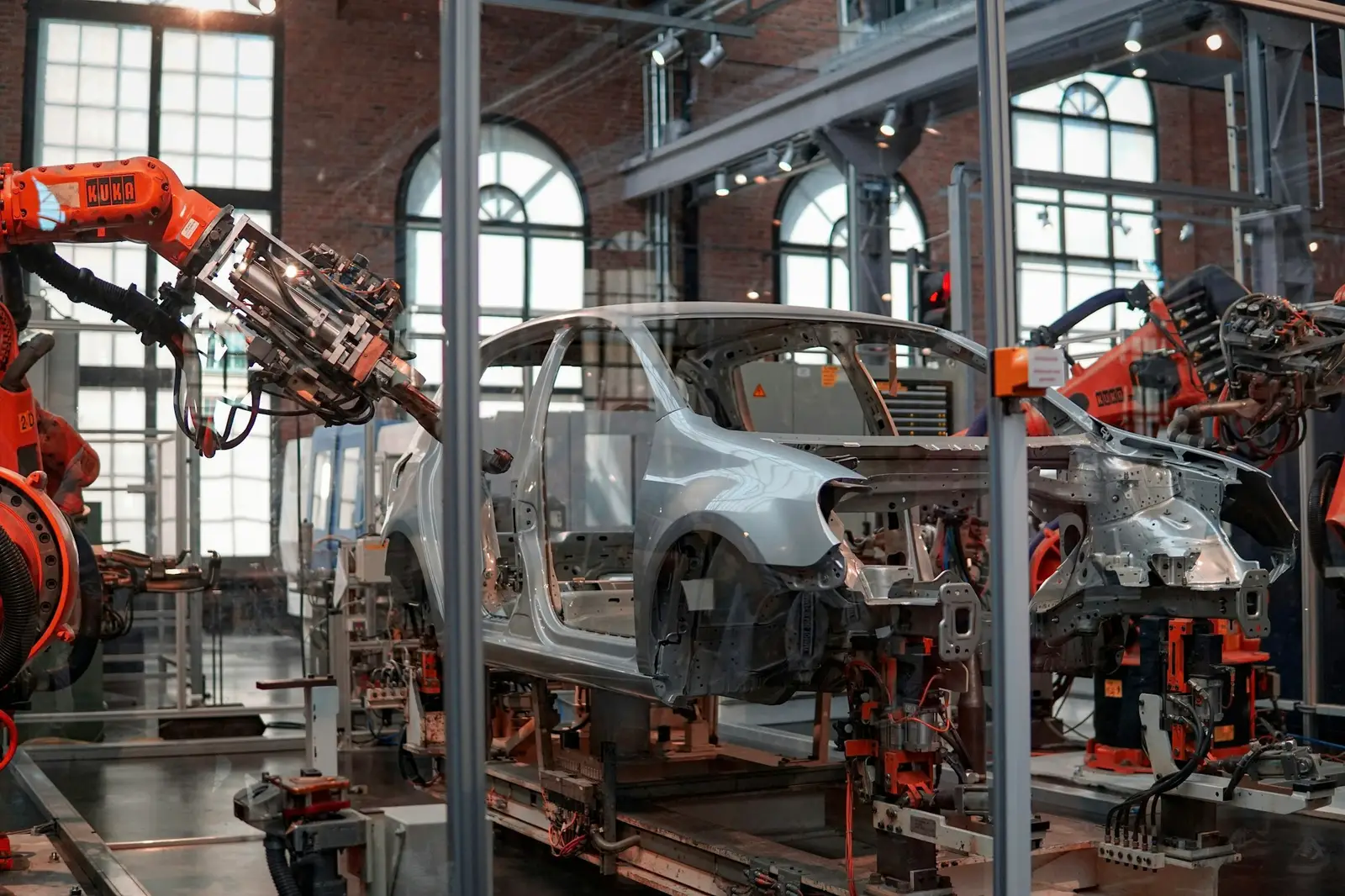
Warehouse robotics vendors sell a compelling picture: shelves gliding to pickers, forklifts driving themselves, orders shipped in minutes. For a distribution centre in Nairobi, Mombasa or Kampala, the real question is narrower: which parts of that picture pay back when labour is relatively affordable, volumes are seasonal and the power grid is not always reliable? This guide explains the main robot types, how goods-to-person systems work, and a practical method for deciding whether, when and where automation makes economic sense.
Key takeaways
- AGVs follow fixed paths and suit stable, repetitive pallet movements; AMRs navigate dynamically and suit changing layouts and mixed human-robot traffic.
- Goods-to-person systems deliver the largest productivity gains in picking, but they require high order volumes, a disciplined warehouse management system (WMS) and clean data.
- In Kenya, labour cost alone rarely justifies robots. Accuracy, throughput peaks, safety, space utilisation and service-level commitments usually carry the case.
- Get the basics right first: barcode or RFID scanning, a proper WMS, slotting and clean master data. Robots amplify process quality, good or bad.
- Plan for power, Wi-Fi coverage, floor condition and local support before committing.
Why warehousing is changing in East Africa
Several forces are pushing regional operators to rethink how warehouses run:
- E-commerce and quick commerce. Online retail, marketplace fulfilment and app-based grocery delivery create many small orders with tight cut-off times, very different from bulk pallet distribution to wholesalers.
- Regional distribution hubs. Mombasa, Nairobi and inland container depots serve Uganda, Rwanda, South Sudan, eastern DRC and beyond. Throughput and accuracy at hubs affect the entire chain.
- Cold chain growth. Pharmaceuticals, dairy, horticulture and frozen foods need temperature-controlled storage, where human working time is constrained and errors are expensive.
- Customer expectations. Retailers and manufacturers increasingly impose service-level agreements on order accuracy and on-time dispatch, with penalties.
- Land and building costs. Industrial space near Nairobi along corridors such as Mombasa Road, Athi River and Tatu City is not cheap, so storage density matters.
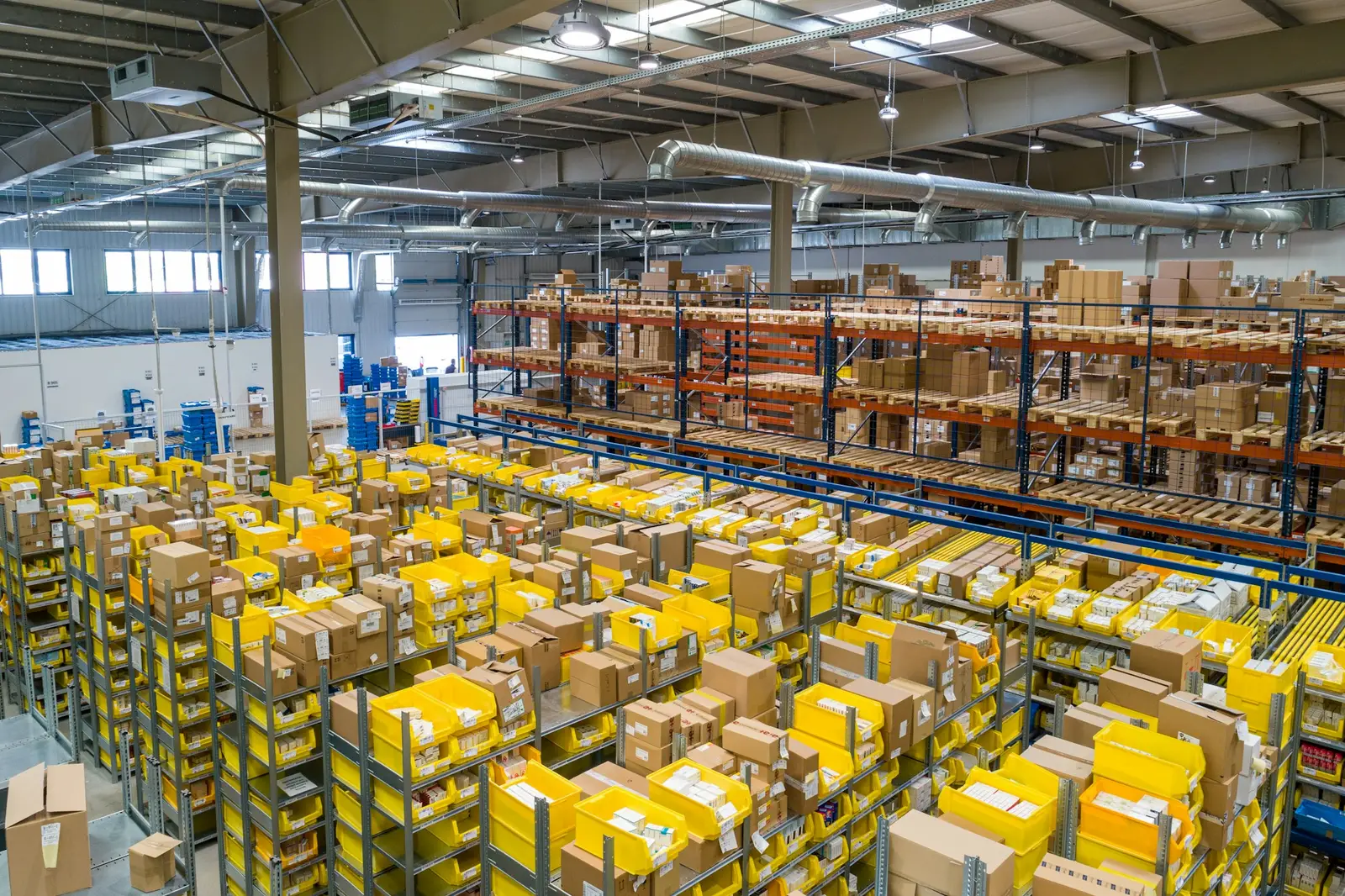
Every bin location in a warehouse like this needs an accurate digital record.
The main robot types
Automated Guided Vehicles (AGVs)
AGVs follow predefined routes using magnetic tape, embedded wires, floor markers, reflectors or laser guidance. They are predictable and mature. Common forms include tuggers that tow carts, unit-load carriers, and automated forklifts for pallet movement.
Strengths: reliability on fixed routes, predictable cycle times, long industrial track record. Weaknesses: changing routes requires physical or configuration work; they stop when obstructed rather than routing around obstacles; less suited to busy mixed-traffic floors.
Autonomous Mobile Robots (AMRs)
AMRs build a map of the facility using sensors such as LiDAR and cameras, localise themselves within it and plan paths dynamically. If a pallet is left in an aisle, an AMR re-routes. A fleet manager allocates tasks and manages traffic.
Strengths: flexible deployment, easier layout changes, scalable by adding units, safer interaction with people. Weaknesses: dependence on good Wi-Fi and accurate maps, sensitivity to very dynamic or reflective environments, and usually payloads lower than heavy AGVs (though pallet-class AMRs exist).
Comparison
| Factor | AGV | AMR |
|---|---|---|
| Navigation | Fixed paths (tape, wire, markers, laser reflectors) | Dynamic, map-based, re-plans around obstacles |
| Layout changes | Requires rework of guidance or routes | Remap and reconfigure in software |
| Best fit | Stable, high-repetition pallet or cart flows | Mixed traffic, changing layouts, picking support |
| Interaction with people | Stops when blocked | Navigates around people and objects |
| Infrastructure dependence | Floor guidance; less reliant on Wi-Fi | Strong Wi-Fi, accurate maps, flat floors |
| Scaling | Route-constrained | Add robots incrementally |
| Typical uses | Production-to-warehouse transfer, dock shuttles | Goods-to-person, cart transport, picking assist |
Other automation categories
- Goods-to-person (G2P) systems: robots bring shelves, totes or bins to a fixed picking station.
- Automated storage and retrieval systems (AS/RS): shuttle, crane or cube-grid systems that store and retrieve totes or pallets at high density.
- Sortation: conveyors with tilt-tray, cross-belt or robot-based sorters for parcel and e-commerce flows.
- Robotic picking arms: vision-guided arms that pick individual items. Improving, but still more sensitive to item variety than human pickers.
- Drones for inventory counting: emerging for high-bay cycle counts.
How goods-to-person works
In a traditional "person-to-goods" warehouse, pickers walk the aisles with a list or handheld scanner. Walking frequently consumes a large proportion of a picker's time. G2P reverses this.
 Order arrives in WMS
        |
 WMS releases order wave / batch
        |
 Robot fleet manager assigns robots ---> robots fetch shelf pods or totes
        |                                         |
        v                                         v
 Picking station: screen shows item + qty <--- pod arrives at station
        |
 Picker scans, picks, confirms (put-to-light shows target order tote)
        |
 Robot returns pod to storage (often re-slotted by demand)
        |
 Completed tote to packing / dispatch
The gains come from eliminating walking, from pick-to-light and scan confirmation (reducing errors), and from the system dynamically storing fast movers closer to stations. The trade-off is complexity: G2P depends on accurate inventory, reliable integration between the WMS and the robot fleet manager, and enough order volume to keep stations busy.
When does warehouse robotics make economic sense in Kenya?
This is where many proposals go wrong. A business case imported from Europe or North America assumes labour costs many times higher than Kenya's. Robots that pay back in two years there may not pay back at all on labour savings alone here. That does not mean automation is wrong for the region. It means you need to count the right benefits.
Benefits that usually matter more than labour savings
- Order accuracy. Mis-picks generate returns, re-deliveries, credit notes and lost customers. For high-value goods such as pharmaceuticals and electronics, one error can cost more than a day's labour.
- Throughput at peak. Festive season, back-to-school and promotional spikes often require temporary staff who are slower and less accurate. Automation absorbs peaks without the same training burden.
- Space utilisation. Dense storage (AS/RS, narrow aisles) can defer the need to lease a larger building.
- Safety. Forklift incidents and manual handling injuries carry human and financial costs.
- Cold-chain conditions. Limited exposure time for staff in freezers makes automation more attractive.
- Traceability. Pharma, food and regulated goods need batch and expiry tracking that automated scanning enforces.
A simple evaluation method
- Profile your orders. Lines per order, units per line, orders per day, SKU count, and the split of fast, medium and slow movers. Measure peak days, not just averages.
- Measure current performance. Picks per labour hour, order accuracy, dock-to-stock time, dispatch cut-off compliance, and damage rates.
- Cost the problem. Put KES values on errors, overtime, temporary staff, penalties, and extra space.
- Model scenarios. Compare (a) process improvement only, (b) partial automation such as AMR cart transport, and (c) full G2P or AS/RS. Include capital, integration, maintenance, spares, power infrastructure, software subscriptions and staff training.
- Stress-test assumptions. What happens if volume grows 50% slower than planned? If power fails for four hours? If the vendor's local partner exits?
- Consider leasing or robots-as-a-service. Some vendors offer subscription models that lower upfront capital. Check what happens at contract end and who owns the data and maps.
As a general guide, operations with high order volumes of small items, many SKUs, strict accuracy requirements and expensive errors are the strongest candidates. Low-volume bulk pallet operations with stable customers are usually better served by a good WMS, scanners and well-trained forklift operators.
Get the foundations right first
Robots do not fix poor inventory discipline. Before any automation:
- Implement a WMS with location-level inventory, directed putaway and picking, and integration to your ERP. If you sell to businesses registered for VAT, ensure invoicing flows remain compliant with KRA eTIMS requirements.
- Barcode everything. Locations, pallets, cartons and where practical units. Enforce scanning at every movement.
- Clean master data. Accurate dimensions and weights per SKU are essential for robotic handling and slotting.
- Slot intelligently. Put fast movers near dispatch. This alone often yields significant walking reductions.
- Measure. Without baseline KPIs you cannot prove any later improvement.
Many operations find that these steps deliver much of the benefit they hoped robots would provide, at a fraction of the cost.
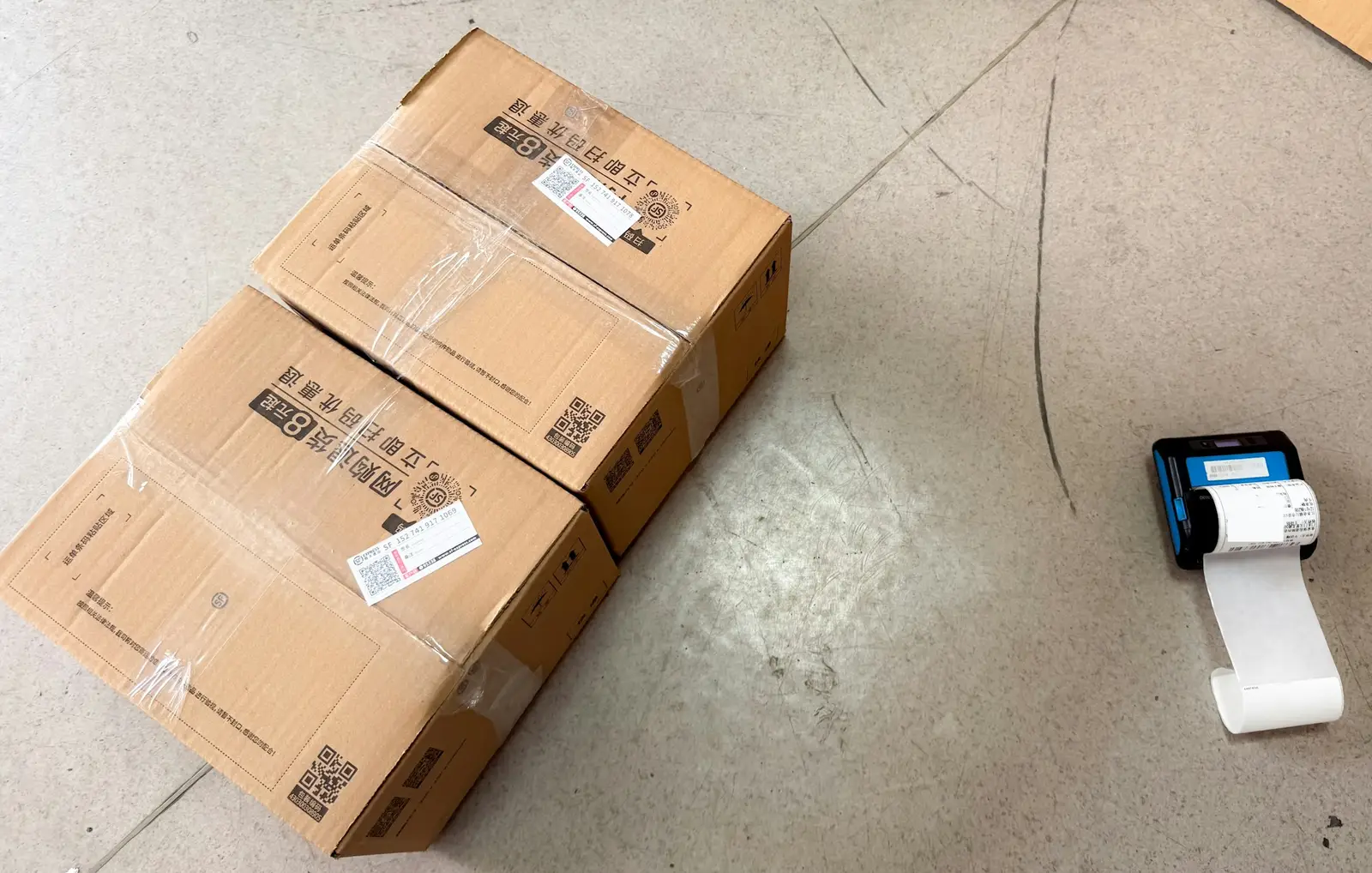 Scanning at every handover is what turns stock counts into real-time data.
Infrastructure requirements
Wi-Fi and networking
AMR fleets depend on reliable wireless coverage across the floor, including high-bay aisles where metal racking and stock can block signals. Commission a predictive and on-site survey, design for roaming without dropouts, and segment robot traffic on its own VLAN. Industrial Wi-Fi design is different from office Wi-Fi.
Power
Robots charge at docking stations, and fleet managers, WMS servers and network switches need continuous power. Size UPS capacity for controlled shutdown or ride-through until the generator stabilises, and include charging stations in your generator load calculations. Voltage fluctuations damage chargers; specify protection accordingly.
Floors
Mobile robots need level, clean, crack-free floors. Older godowns with uneven concrete, expansion joints, ramps or debris may need resurfacing. Check flatness tolerances with the vendor before signing.
Systems integration
The WMS must talk to the robot fleet manager, typically via REST APIs or vendor-specific interfaces. Clarify who owns integration, how failures are handled, and what manual fallback looks like. For background on integration design, see our guide to integrating third-party APIs into web applications.
Decision checklist
- Do you have a WMS with accurate, location-level inventory today?
- Are your order profiles measured, including peaks?
- Have you costed errors, overtime, penalties and space, not just wages?
- Is your floor suitable, and is there reliable Wi-Fi coverage?
- Can your power infrastructure support charging and control systems through outages?
- Does the vendor have local engineers and spares in-country or in the region?
- Is there a manual fallback process if the robots stop?
Common mistakes
- Buying robots to fix a data problem. Inaccurate stock records will make robots deliver the wrong pods faster.
- Using average volumes. Designing for the average leaves you overwhelmed at peak or over-invested for most of the year. Model both.
- Underestimating integration. WMS-to-fleet integration is often the longest part of the project.
- No fallback. If the fleet manager server fails, can the team still pick manually from the same locations?
- Overlooking change management. Pickers and supervisors need training and a voice in station design. Ergonomics at G2P stations matters for productivity.
- Ignoring support logistics. A robot waiting weeks for an imported part is an expensive obstacle.
FAQ
What is the main difference between AMRs and AGVs?
AGVs follow fixed paths and stop when blocked, while AMRs use onboard sensors and maps to plan routes and navigate around obstacles. AGVs suit stable, repetitive flows; AMRs suit dynamic environments.
Is warehouse automation worth it given Kenyan labour costs?
Sometimes. Savings on wages alone rarely justify it. The case is stronger where errors are expensive, volumes are high or peaky, space is constrained, or cold-chain and safety requirements apply. Model all of these in KES before deciding.
Can we automate part of a warehouse?
Yes, and most operations should start that way. AMR cart transport between zones, a single G2P zone for fast movers, or automated sortation for dispatch are common first steps that can be expanded later.
How do robots handle power outages?
Robots run on batteries, but chargers, fleet managers, Wi-Fi and WMS servers need protected power. With properly sized UPS and generator integration, operations can continue or pause safely. Test this before go-live.
To understand the AI behind autonomous navigation, read Physical AI Explained: Beyond Chatbots. For factory-floor automation, see How AI-Powered Robots Are Transforming Manufacturing.
How TechBytes can help
We help logistics operators build the foundations that make automation work: warehouse Wi-Fi surveys and design, segmented networks, power protection, and WMS integration with ERPs and robot fleet managers. We can also help you build a business case using your own order data before you talk to robot vendors. See our network infrastructure services or request a consultation.