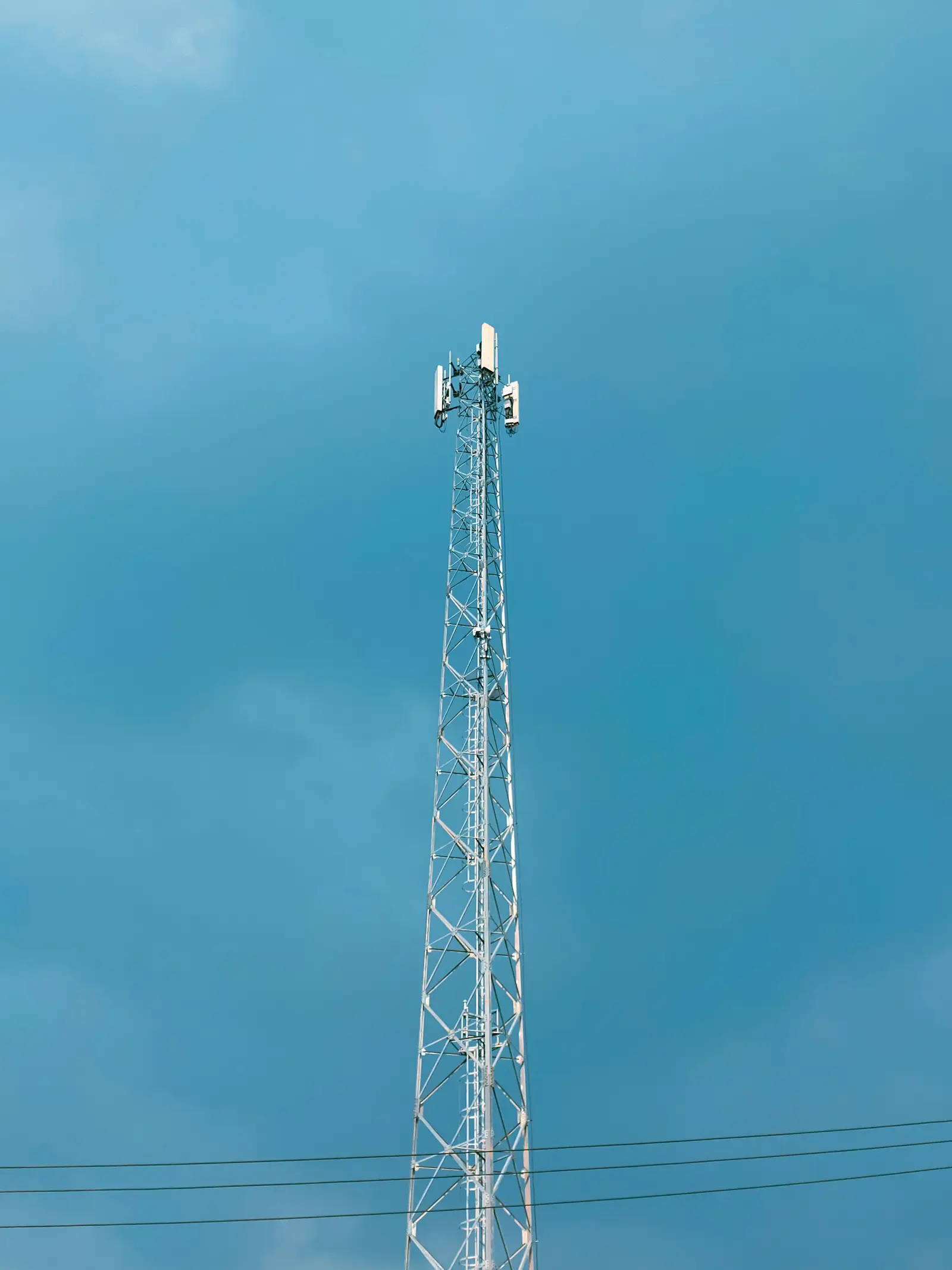
5G arrived in Kenya with considerable marketing, and many business owners are understandably unsure what it changes for them beyond faster phone downloads. The honest answer is that 5G is three different things for businesses: a fast last-mile alternative to fibre, a platform for differentiated network services, and a technology for private on-site networks. This guide separates the realistic opportunities from the hype, explains the technical concepts you will hear in sales conversations, and helps you decide whether and how to use 5G in your organisation.
Key takeaways
- Safaricom launched commercial 5G in Kenya in 2022, and coverage has been expanding from major urban centres. Availability at a specific address must be checked, not assumed.
- For most SMEs today, the most practical 5G product is fixed wireless access (FWA): a 5G router as a primary or backup business internet link.
- Network slicing and ultra-low-latency services depend on 5G standalone cores and operator product offerings; treat them as emerging in the region rather than off-the-shelf.
- Private 5G suits large sites with demanding mobility or device-density needs, but Wi-Fi 6/6E or wired networks remain the right answer for most premises.
- 5G improves the radio link, not the distance to a far-away cloud region. Pair it with local or edge processing for latency-sensitive workloads.
- Design for failover: 5G is an excellent second path alongside fibre, even where it is not good enough to be the only one.
What 5G actually is
5G is the fifth generation of mobile network standards defined by 3GPP. Compared with 4G LTE, it brings wider radio channels, more efficient use of spectrum, better support for many simultaneous devices, and a new, cloud-native core network architecture. The ITU framed three usage categories that are still useful:
- Enhanced mobile broadband (eMBB): higher throughput and capacity. This is what most 5G users experience today.
- Ultra-reliable low-latency communications (URLLC): very low and predictable latency for control applications. This needs specific network features and is far less widely deployed.
- Massive machine-type communications (mMTC): very large numbers of low-power devices. In practice, many IoT deployments still use LTE-M or NB-IoT, which evolve alongside 5G.
Non-standalone versus standalone
Early 5G deployments worldwide, including many in Africa, used non-standalone (NSA) architecture: 5G radios attached to an existing 4G core. NSA delivers higher speeds but not the advanced features. Standalone (SA) 5G uses a new 5G core, which is what enables network slicing and more consistent low latency. When a provider pitches slicing or guaranteed latency, ask whether the service runs on an SA core at your location.
Spectrum and range
5G performance depends heavily on frequency band. Mid-band spectrum (commonly around 3.5 GHz in many markets) offers a good mix of capacity and coverage, but it penetrates buildings less well than the lower bands used for 4G. Expect variation between outdoor and indoor performance, and between a window-mounted router and one in a basement comms room.
5G and LTE coverage now make reliable backup links practical for most sites.
The 5G landscape in Kenya and the region
Safaricom launched its commercial 5G service in Kenya in 2022, starting in selected towns and expanding since. Other operators in Kenya and in Uganda and Tanzania have launched or trialled 5G in urban centres. The Communications Authority of Kenya manages spectrum allocation and licensing. Because coverage maps change quickly, the only reliable approach is to:
- Check the operator's current coverage tool for your exact location.
- Run a site survey with a test device at the intended router position, at different times of day.
- Ask for business service terms in writing: fair-use thresholds, contention, static IP availability and support hours.
Use case 1: Fixed wireless access for business internet
FWA uses a 5G router at your premises instead of a fibre connection. For Kenyan businesses, this is the most immediately useful 5G product.
Where FWA makes sense
- Areas where fibre is unavailable or slow to install, such as new estates, industrial zones on the outskirts of towns, and upcountry branches.
- Temporary sites: construction sites, events, pop-up stores and project offices.
- Backup link: a second path from a different operator than your fibre provider, so that a fibre cut does not stop the business.
- Rapid branch openings, where waiting weeks for fibre is not acceptable.
FWA compared with fibre and 4G
| Factor | Business fibre | 5G FWA | 4G LTE |
|---|---|---|---|
| Typical installation time | Days to weeks, depends on civil works | Same day to days, if covered | Same day |
| Throughput consistency | High; dedicated options available | Good but varies with signal and cell load | Variable; often congested |
| Latency | Lowest and most stable | Low, improves over LTE | Higher and more variable |
| Symmetric upload | Often available | Usually asymmetric | Asymmetric |
| SLA options | Common on enterprise products | Varies; check terms | Usually best-effort |
| Vulnerability | Fibre cuts from road works | Weather, obstructions, cell congestion | Cell congestion |
| Best role | Primary link for main offices | Primary for small sites, backup for larger ones | Backup or out-of-band management |
For a business that depends on cloud systems, M-Pesa confirmations and VoIP, the strongest design is fibre from one provider plus 5G FWA from another, with a router or SD-WAN appliance that fails over automatically. Pricing for business FWA and fibre changes frequently; check current packages with operators rather than relying on old comparisons.
Use case 2: Mobile workforce and field operations
5G improves the experience for staff working from vehicles, construction sites, farms and client premises: faster upload of photos and documents, smoother video calls and better performance for field service apps. The improvement is real where coverage exists, but field applications must still work offline, because routes between towns frequently drop to 4G or lower. Design field apps to cache and sync, not to depend on continuous connectivity. Our guide on edge computing vs cloud computing covers offline-first patterns.
Use case 3: Network slicing
Network slicing lets an operator run multiple logical networks on the same physical infrastructure, each with its own performance characteristics. A slice could, for example, guarantee capacity for payment terminals or video surveillance even when the public network is busy.
What to know before buying:
- Slicing requires a 5G SA core and operator products built on it. Ask what is commercially available at your sites today rather than on a roadmap.
- Understand how the slice is measured and what remedies apply if performance falls short.
- Devices must support the relevant 5G SA features. Older 5G devices may not.
For most SMEs, slicing is not yet a buying decision. For banks, logistics firms, broadcasters and utilities with many sites, it is worth an exploratory conversation with operators.
Use case 4: Private 5G networks
A private 5G network is a dedicated mobile network for a single site or organisation, using its own core (on site or hosted) and radios, with spectrum either licensed directly, leased from an operator, or provided as a managed service by an operator.
When private 5G beats Wi-Fi
- Large outdoor or semi-outdoor areas: ports, mines, container yards, large farms and airports.
- Highly mobile equipment that must hand over between access points without dropping, such as automated guided vehicles and forklifts.
- High device density with strict interference control.
- Situations needing strong SIM-based device identity and security.
When Wi-Fi or wired is better
- Offices, shops, schools and most warehouses. Modern Wi-Fi 6 or 6E with good design delivers excellent performance at much lower cost and with more widely available skills.
- Fixed machines that can be cabled. Ethernet remains the most reliable option for stationary equipment.
Private 5G in Kenya involves spectrum and licensing questions handled by the Communications Authority, and partnering with an operator is often the practical route. Expect a significant project with radio planning, core deployment, device certification and ongoing management. It belongs in the plans of large industrial and logistics operators, not most SMEs. For factory-specific architecture, see the role of edge computing in smart factories.
 Most modern apps are a front end talking to many APIs at once.
Use case 5: 5G with edge computing
Low radio latency only matters if the application server is also close. A camera on a 5G link sending video to a server in Europe still incurs the long-haul round trip. The pattern that delivers results is 5G for the access link, combined with processing on site or in a nearby data centre:
 Device (camera, scanner, AGV, tablet)
        |  5G radio (low latency, high capacity)
        v
 Operator network / private 5G core
        |
        +--> On-site edge server or operator edge (real-time processing)
        |        |
        |        v  events, summaries
        +--> Cloud region (analytics, storage, management)
Operators globally have offered multi-access edge computing (MEC), where compute sits within the operator network. Availability of MEC products in East Africa is limited and evolving; ask operators directly what they offer.
Realistic SME use cases today
- Backup internet: FWA from a second operator with automatic failover. Low cost, immediate value.
- Fast branch launches: open a new shop or office on FWA, add fibre later if justified.
- Event and temporary connectivity: POS, M-Pesa checkout and ticket scanning at events without waiting for fixed lines.
- Remote CCTV viewing: upload of selected clips and live views, with recording kept locally.
- Field sales and service: faster sync for order-taking and service apps where coverage exists.
Security considerations
- Router hardening: change default admin credentials, disable remote management from the internet, update firmware and disable unused services.
- Carrier-grade NAT: many mobile connections share public IPs. If you need inbound access (for example to a site VPN), ask for a static or public IP or use an outbound-initiated VPN or SD-WAN tunnel.
- Segmentation: put IoT devices, POS and staff devices on separate VLANs regardless of the WAN technology.
- SIM control: lock data SIMs to their devices where the router supports it, and monitor usage to detect theft or misuse.
- Data protection: CCTV and staff tracking data are personal data under the Kenya Data Protection Act 2019. Faster uploads do not change your obligations around notice, retention and access.
Common mistakes
- Buying on a coverage map alone without a site test at the actual router location.
- Mounting the router in the comms room deep inside a building, then blaming 5G for poor speeds. Place it where signal is strongest and run Ethernet to the network.
- Relying on a single 5G link for critical operations with no fallback.
- Assuming slicing or URLLC is available because the network is labelled 5G.
- Ignoring fair-use policies on packages that look unlimited.
- Choosing private 5G where well-designed Wi-Fi would do at a fraction of the cost and complexity.
FAQ
Is 5G a replacement for fibre?
For small sites and where fibre is unavailable, 5G FWA can be the primary link. For main offices and data-heavy operations, fibre remains more consistent, and 5G is best used as a backup from a different provider.
Do I need new devices to use 5G?
Only the device that connects to the 5G network needs 5G support. With FWA, the 5G router connects to the network and your existing computers and phones connect to it over Wi-Fi or Ethernet.
Does 5G make cloud applications faster?
It improves the local radio link, which helps responsiveness and upload speed. It does not reduce the long-distance delay to cloud regions outside Kenya, so latency-sensitive workloads still benefit from local hosting.
Is private 5G available in Kenya?
Private and dedicated mobile network solutions can be arranged, typically with operator involvement and subject to Communications Authority licensing. They suit large industrial and logistics sites; discuss current options with operators.
How do I know if 5G is available at my premises?
Check the operator's current coverage tool, then test with a 5G device at the intended router position at different times of day before committing to a contract.
How TechBytes can help
TechBytes EA designs resilient connectivity for Kenyan businesses, combining fibre, 5G fixed wireless and LTE with automatic failover and secure segmentation. We run site surveys, supply and configure business-grade routers and SD-WAN, and monitor links so that outages are handled before staff notice. Learn more about our network infrastructure services or request a quote for a site assessment.