
"Should this run at the edge or in the cloud?" is one of the most consequential architecture questions a business in East Africa faces, because the answer depends on things that vary more here than in many markets: last-mile link quality, distance to the nearest hyperscale region, power stability at the site and the cost of bandwidth. This guide compares the two models honestly, shows the hybrid patterns that work in practice, and gives you a decision checklist for placing each workload.
Key takeaways
- Edge and cloud are not competitors. The edge handles what must happen locally and immediately; the cloud handles what benefits from scale, central management and elastic capacity.
- Latency, bandwidth cost, link reliability and data residency are the four forces that pull workloads to the edge.
- Elasticity, managed services, central analytics and lower operational burden pull workloads to the cloud.
- For sites on unreliable links, design offline-first: the site keeps working without the WAN and synchronises when it returns.
- Every edge node is a physical asset to power, secure, patch and replace. Budget for operations, not just hardware.
- Local data centres in Nairobi sit between the two and can cut latency for regional users without the burden of on-site hardware.
Defining the terms precisely
Cloud computing means renting compute, storage and managed services from a provider's data centres, consumed on demand and managed via APIs. For East African organisations, the nearest hyperscale regions at the time of writing are in South Africa (AWS, Microsoft Azure and Google Cloud all operate there), Europe and the Middle East. Providers' footprints change, so check current region lists before designing.
Edge computing means running compute close to where data is produced or consumed: in a factory, branch, retail store, hospital, warehouse, mast site or vehicle. An edge node can be anything from a small industrial PC or ruggedised gateway to a rack of servers in a branch comms room.
Between them sit regional and metro facilities: colocation and cloud services in Nairobi from operators such as iXAfrica, Africa Data Centres and Safaricom's own data centre and cloud services, plus local internet exchange points such as KIXP. These are sometimes called the "near edge". Hosting there keeps traffic in-country and close to Kenyan users while you still avoid running hardware at every site.
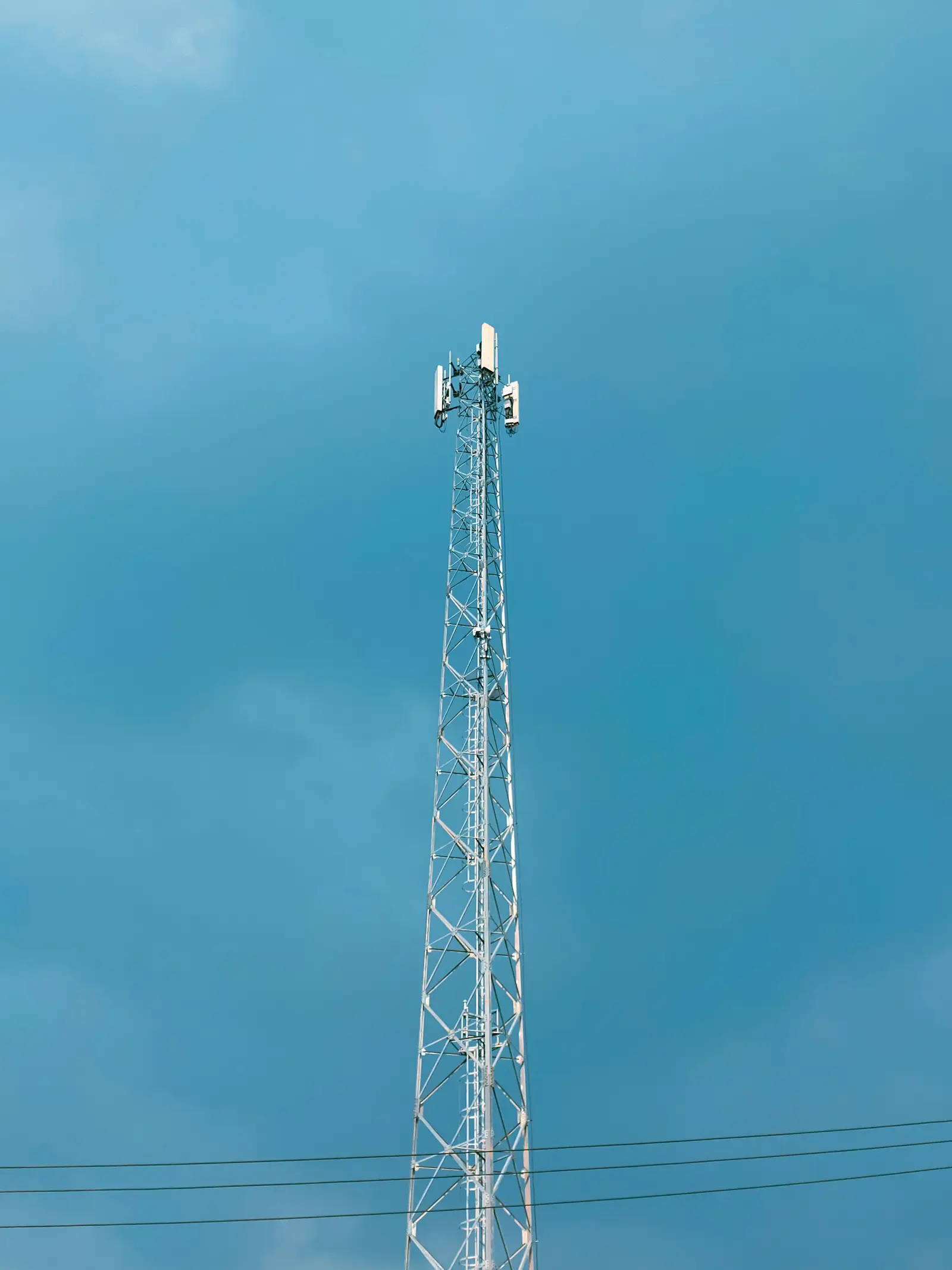 5G and LTE coverage now make reliable backup links practical for most sites.
Why the question is sharper in East Africa
- Distance to regions. Traffic from Nairobi to a hyperscale region in Johannesburg or Europe travels thousands of kilometres over submarine and terrestrial fibre. Round-trip times in the tens of milliseconds to well over 100 ms are normal depending on route, and they spike during cable faults. That is fine for email and ERP, but poor for machine control or for a POS that must respond instantly.
- Last-mile variability. A Nairobi head office on dual fibre is a very different environment from a branch in a smaller town on a single LTE router. Many organisations have both.
- Bandwidth costs. Streaming raw video or high-frequency sensor data to the cloud can cost more in connectivity than the compute it consumes.
- Power. Outages and voltage fluctuations are a practical reality in many locations. An edge node without a UPS, surge protection and graceful shutdown will corrupt data eventually.
- Data protection. The Kenya Data Protection Act 2019 and its regulations govern processing of personal data, and some categories of processing raise questions about cross-border transfers. Keeping certain processing local can simplify compliance, though it does not remove obligations. Consult the ODPC guidance and legal counsel for your specific case.
Side-by-side comparison
| Dimension | Edge computing | Cloud computing |
|---|---|---|
| Latency to local users or machines | Single-digit milliseconds on a LAN | Tens to 100+ ms from Kenya to hyperscale regions |
| Behaviour when WAN fails | Continues operating if designed offline-first | Unavailable to the affected site |
| Scalability | Limited by hardware on site; scaling means buying and shipping | Elastic, near-instant |
| Upfront cost | Hardware, installation, UPS, enclosures | Minimal; pay as you go |
| Ongoing cost | Maintenance, spares, site visits, power | Usage-based, plus egress and bandwidth |
| Bandwidth use | Low: send summaries and events | High if raw data is uploaded |
| Managed services (databases, AI, analytics) | Limited; you run them | Extensive |
| Physical security | Your responsibility at every site | Provider's responsibility |
| Patch and lifecycle management | Distributed and harder; needs fleet tooling | Centralised; partly provider-managed |
| Data locality | Data stays on site by default | Data in provider region unless a local option is used |
| Skills required | Hardware, networking, OT, fleet management | Cloud architecture, cost management, security |
Neither column wins outright. The table is a tool for placing individual workloads, not for choosing a single model for the organisation.
Workloads that belong at the edge
- Real-time control and safety: machine interlocks, PLC-adjacent logic, robotics. These need deterministic, local response.
- Video analytics: inspection cameras, people counting, number-plate recognition. Analysing locally and sending only events avoids uploading video.
- Branch and retail operations: POS, stock lookup and local printing must keep working when the WAN drops.
- Data reduction: aggregating high-frequency sensor readings into minute-level summaries before upload.
- Local caching: software updates, training videos and content served from a branch cache rather than downloaded repeatedly over metered links.
Workloads that belong in the cloud
- Systems of record: ERP, CRM, accounting and HR, where consistency and central access matter more than millisecond latency.
- Analytics and reporting across all sites.
- Model training for machine learning, which needs bursts of large compute.
- Customer-facing web and mobile backends with variable traffic.
- Backup and disaster recovery, including off-site copies of edge data.
- Identity, device management and monitoring control planes.
Hybrid patterns that work
Pattern 1: Edge processes, cloud aggregates
The edge node ingests raw data, acts on it locally and sends summaries and exceptions to the cloud. The cloud stores history, runs analytics and pushes updated configuration or models back down.
 Sensors / cameras / POS
        |
        v
 +------------------------+        summaries, events, alerts
 | Edge node (site)       |  ---------------------------------->  Cloud / Nairobi DC
 |  - local processing    |                                       - time-series store
 |  - local database      |  <----------------------------------  - dashboards, BI
 |  - outbound queue      |        config, rules, ML models        - model training
 +------------------------+
        |
        v
 Local actions (alarms, PLC signals, receipts)
Pattern 2: Cloud-first with an edge cache
The application lives in the cloud, but each site runs a small cache or read replica for the most-used data (product catalogue, price list, customer list). Writes go to the cloud when available and queue locally when not. This suits retail chains and distributors.
Pattern 3: Near-edge hosting in Nairobi
Instead of on-site hardware, latency-sensitive services for Kenyan users run in a local data centre or local cloud, while bulk analytics and backups go to a hyperscale region. This is often the simplest way to improve user experience for national services without managing hundreds of devices.
Pattern 4: Cloud-managed edge
Hyperscalers and independent vendors offer software that lets you manage edge devices and deploy containers to them from a central console. Services in this category include AWS IoT Greengrass and Azure IoT Edge, plus Kubernetes distributions designed for small sites. These give you fleet management without building it yourself; check current regional support and pricing before committing.
Edge and cloud both depend on well-run infrastructure close to the business.
Designing offline-first for unreliable links
Offline-first means the site is fully functional without the WAN and treats connectivity as an optimisation. The core techniques:
- Local source of truth for local operations. The branch database records sales, stock movements and attendance locally first.
- Outbound queue (store-and-forward). Every change is written to a durable local queue and sent to the cloud when the link is up, with retries and backoff.
- Idempotent sync. Each record carries a globally unique ID (for example a UUID generated at the edge) so that replays do not create duplicates.
- Conflict rules decided in advance. For each data type, decide who wins: the cloud for prices, the edge for till transactions, merge for stock counts with an audit trail.
- Clear staleness indicators. Show staff when data was last synchronised, so they know whether a price list may be out of date.
- Bounded local storage. Size disks for the longest plausible outage plus margin, and alert well before the queue fills.
Payments add a nuance: mobile money confirmations require connectivity to the provider. A branch POS can still record a sale as "payment pending verification" during an outage and reconcile later, but you need a business policy for what staff do when they cannot confirm a payment. We cover confirmation flows in how to integrate M-Pesa payments into a web application.
Running edge infrastructure responsibly
Edge hardware lives in harsher conditions than a data centre: dust, heat, unstable power and limited physical security. A sound baseline for each site:
- Industrial or small-form-factor hardware rated for the environment, with solid-state storage.
- A line-interactive or online UPS sized for graceful shutdown, plus surge protection; integrate with generator or solar systems where present.
- Dual WAN where practical (fibre plus LTE or 5G from a different operator).
- Remote management: out-of-band access or at least a cellular-backed management path.
- Full-disk encryption and secure boot where supported, because devices can be stolen.
- Centralised monitoring, logging and patching. An unpatched edge box is a foothold into your network.
- Documented replacement procedure: a spare device that can be shipped, plugged in and auto-provisioned.
Decision checklist for placing a workload
- Does it need a response in under roughly 50 ms, or must it continue during a WAN outage? Lean edge.
- Does it generate more data than your link can carry economically? Process at the edge, send summaries.
- Are there data residency or sensitivity reasons to keep raw data on site or in-country? Edge or near-edge.
- Is demand highly variable or does it need large bursts of compute? Cloud.
- Does it need managed databases, AI services or global access? Cloud.
- Do you have the skills and budget to run hardware at every site for five years? If not, prefer near-edge or cloud.
- What happens if the site loses power for four hours? Make sure the answer is designed, not discovered.
Common mistakes
- Lifting everything to a distant cloud region and then discovering branch staff wait seconds for each screen.
- Treating edge devices as appliances that never need updates. They need patching and monitoring like any server.
- No UPS or a consumer UPS with dead batteries. Power events are the most common cause of edge data corruption.
- Synchronisation without idempotency, creating duplicate transactions after every reconnect.
- Ignoring egress costs when large datasets flow out of the cloud back to sites.
- Building custom fleet management instead of using established tooling.
FAQ
Is edge computing cheaper than cloud computing?
Not inherently. Edge reduces bandwidth and can avoid cloud usage charges, but adds hardware, power, maintenance and site visits. It is cheaper when it replaces expensive data transfer or prevents costly downtime.
Can a small business benefit from edge computing?
Yes, often in simple forms: a local server or NAS that keeps POS and files available during outages, synchronising to the cloud. You do not need specialised edge platforms to apply the principle.
Where are the nearest cloud regions to Kenya?
At the time of writing, the major hyperscalers' nearest regions are in South Africa, with others in Europe and the Middle East. Local data centres in Nairobi also offer colocation and cloud services. Check providers' current region lists.
How does 5G change the edge versus cloud decision?
5G can improve last-mile capacity and latency where available, and enables private networks at sites. It does not shorten the distance to a remote cloud region, so local processing remains important. See how 5G is transforming business technology.
What is the difference between edge and near-edge?
Edge runs on your premises or devices; near-edge runs in a metro or regional data centre close to users. Near-edge offers lower latency than distant regions without on-site hardware.
How TechBytes can help
TechBytes EA designs hybrid architectures that place each workload where it performs and costs best, from branch servers with offline-first sync to cloud and Nairobi-hosted platforms. We supply and install ruggedised edge hardware, UPS and dual-WAN links, and manage them centrally afterwards. Explore our network infrastructure services or our managed services for ongoing fleet monitoring and patching.