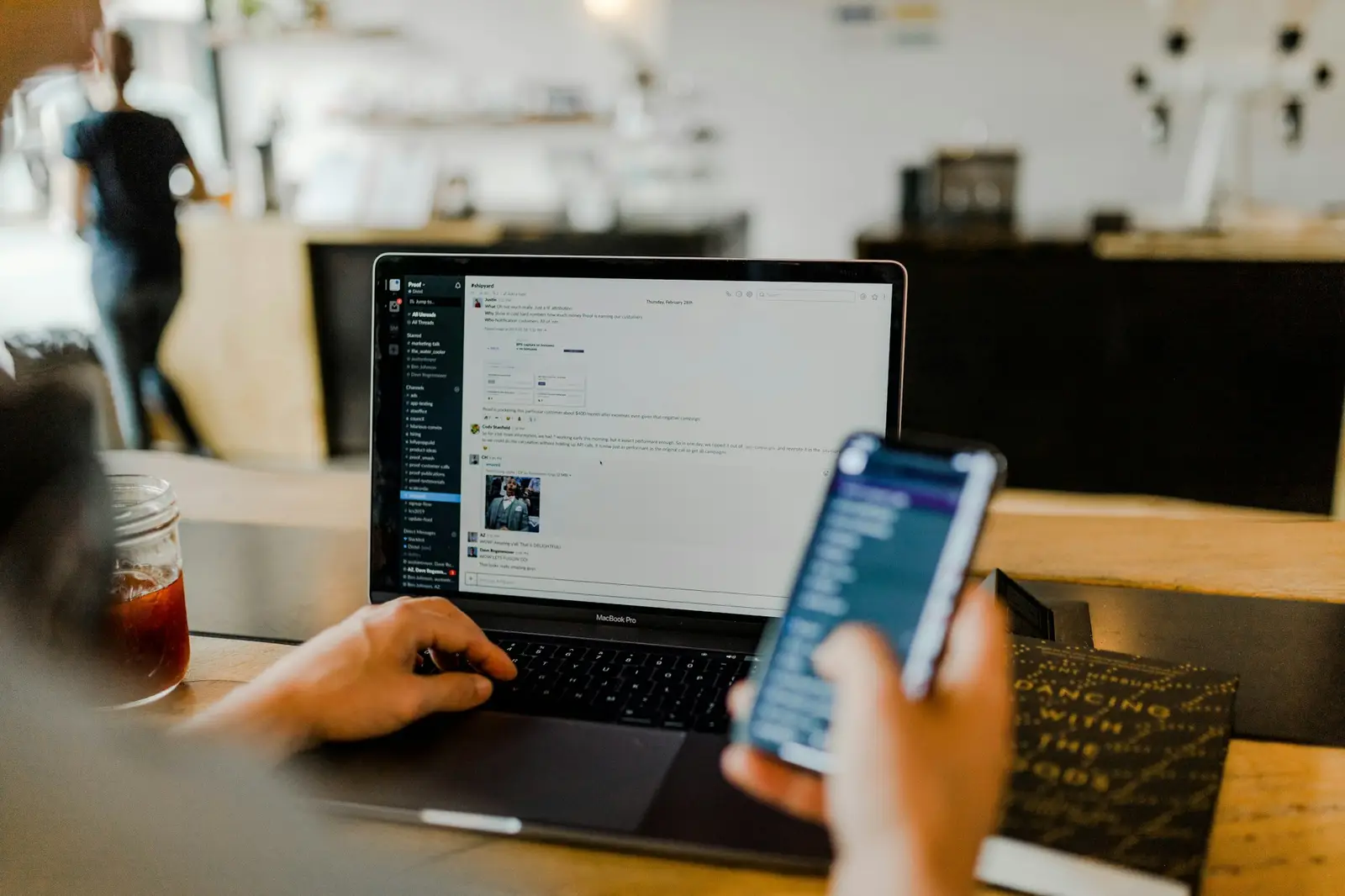
Mobile money is no longer a consumer convenience bolted onto East African commerce; for most businesses in Kenya, Uganda and Tanzania it is the primary collection rail. Yet many organisations still treat it as a phone in a drawer: a till number on a sticker, a cashier reading SMS confirmations, and a bookkeeper reconciling statements by hand at month end. This guide explains how the main mobile payment technologies actually work, what they make possible operationally, and how to move from "we accept M-Pesa" to "M-Pesa is integrated into our systems".
Key takeaways
- M-Pesa, launched by Safaricom in 2007, made the phone number a de facto bank account for millions of Kenyans and set the template for mobile money across the region.
- Lipa na M-Pesa Till (Buy Goods) and Paybill serve different business models; choosing the wrong one creates reconciliation pain that no software fully fixes later.
- Airtel Money, MTN MoMo and bank rails such as PesaLink matter for regional reach and for larger-value or bank-to-bank flows.
- The real business gain comes from APIs: automated confirmation, automatic ledger posting and real-time cash visibility, not from the payment method itself.
- Credit products such as Fuliza change customer behaviour at the point of sale, but they are a relationship between the customer and the provider, not the merchant.
- Treat payment data as personal data under the Kenya Data Protection Act 2019 and design for failure: delayed callbacks, reversals and network outages are normal.
From airtime transfers to a national payment rail
M-Pesa launched commercially in Kenya in March 2007, built by Safaricom with Vodafone. The original proposition was simple: send money to another phone number and let the recipient cash out at an agent. What made it work was not the technology (SMS and USSD menus on basic feature phones) but the agent network, which turned thousands of small shops into cash-in and cash-out points.
Over the following years, the same rails were extended to businesses. Today a Kenyan business typically touches M-Pesa in several ways:
- Customer to business (C2B): customers pay a Till or Paybill number from their phone menu or app.
- Merchant-initiated prompts (STK Push / M-Pesa Express): the business triggers a PIN prompt on the customer's handset for a precise amount.
- Business to customer (B2C): salary advances, refunds, winnings, supplier and agent commissions paid straight to phones.
- Business to business (B2B): paying suppliers' Paybill or Till numbers from a business account.
- Pull to bank: settling the M-Pesa business float into a bank account, often automatically.
Across the region, the pattern repeated with different operators. In Uganda, MTN Mobile Money (MoMo) and Airtel Money dominate. In Tanzania, Vodacom M-Pesa, Airtel Money and other operator wallets compete, and the Bank of Tanzania has run its own instant payment switch (TIPS) to connect wallets and banks. Rwanda, Ghana and other markets have their own MTN MoMo ecosystems. For a business with regional ambitions, "mobile money" means several operators, several APIs and several settlement processes.
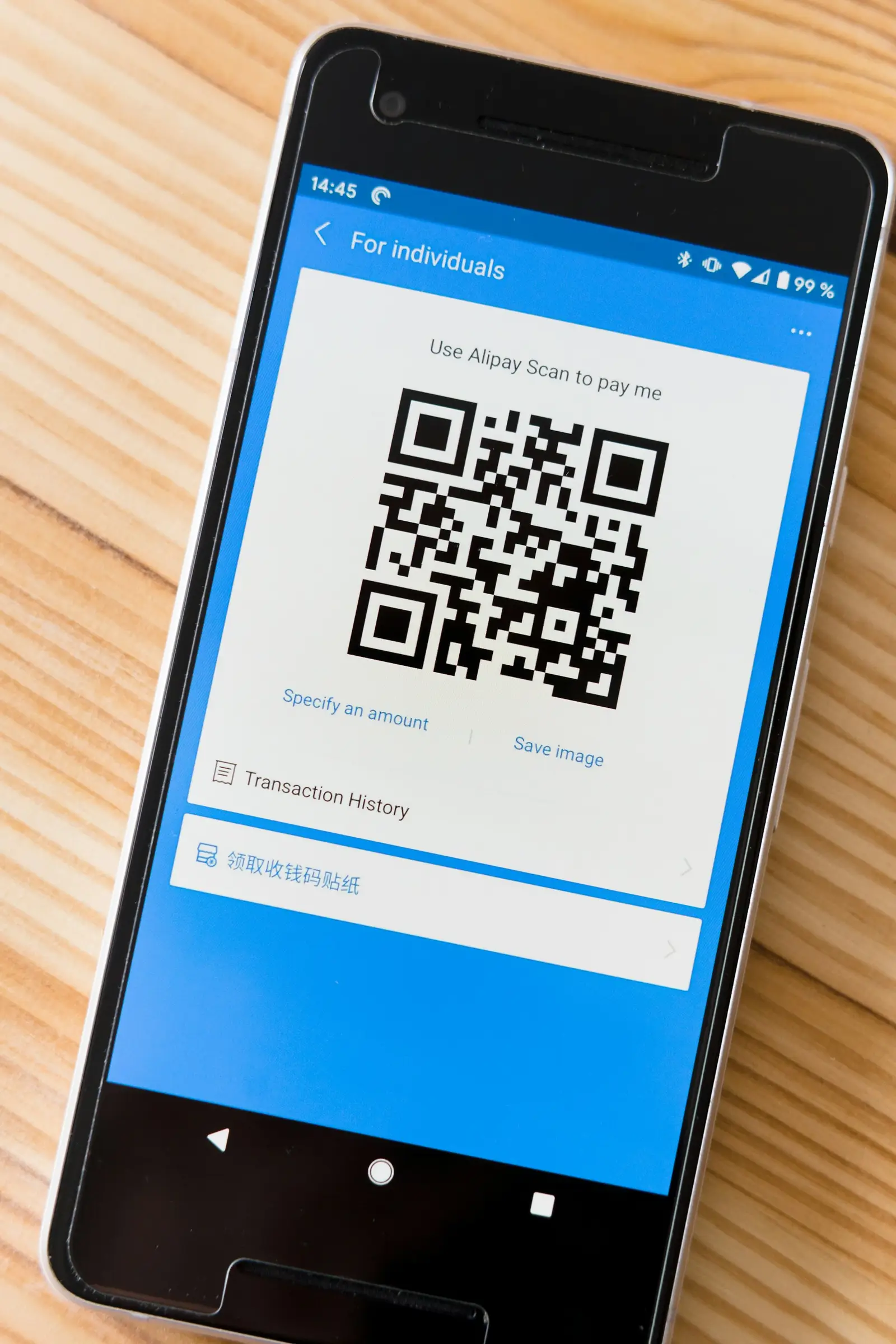
QR and mobile money payments are everyday checkout options in East Africa.
The core business products in Kenya
Lipa na M-Pesa Buy Goods (Till)
A Till number is designed for retail: walk-in customers paying for goods or services at a counter. The customer enters the till number and amount; there is no account reference field. That design is perfect for a supermarket checkout and awkward for anything where you need to know what the payment was for, such as an invoice or a school fee.
Businesses with several outlets usually get a head office (store) number with individual tills underneath, which matters later when you integrate: the API identifies the organisation by one code and the individual till by another.
Paybill
A Paybill number adds an account number field that the customer fills in. Utilities, schools, landlords, SACCOs, insurers and any business that issues invoices use Paybill because the account reference lets you match payment to customer or invoice automatically. The trade-off is user error: customers mistype account numbers, use their ID number, or leave a name. Your integration needs a validation step and a human exception queue.
M-Pesa Express (STK Push)
Instead of asking the customer to type a number and amount, your system sends a payment request to their phone, and they only enter their PIN. Error rates drop sharply because the amount and reference are set by your system. This is the default pattern for e-commerce checkouts, online bookings and in-app payments. The technical detail is in our companion guide on integrating M-Pesa into a web application.
Fuliza and credit at the point of sale
Fuliza, launched in 2019, is an overdraft facility on M-Pesa provided by Safaricom with partner banks. When a customer has insufficient balance, Fuliza can cover the shortfall. For merchants, the effect is that some payments complete that would otherwise fail; the credit risk and the fees sit between the customer and the provider, not with you. The practical point for businesses is that you receive a normal payment, and you should not build logic that assumes your customer's balance was sufficient or that the payment reflects their liquidity.
Airtel Money and Telkom T-Kash
Airtel Money in Kenya provides comparable consumer and merchant services, and it is the dominant or co-dominant wallet in several neighbouring markets. Telkom Kenya's T-Kash serves a smaller base. If your customers are price-sensitive or concentrated in segments where Airtel is strong, offering Airtel Money is not optional, and its merchant APIs follow a broadly similar request-and-callback model.
Interoperability and PesaLink
For years the wallets were closed loops. Kenya introduced person-to-person interoperability between the mobile network operators in 2018, allowing transfers between M-Pesa, Airtel Money and T-Kash. Merchant-level interoperability, where a customer on one network pays a merchant on another, has progressed more slowly and has been a regulatory focus for the Central Bank of Kenya; check the current status with your provider before promising customers that any wallet can pay any till.
PesaLink, launched in 2017 and operated by Integrated Payment Services Limited under the Kenya Bankers Association, is the bank-side complement: real-time account-to-account transfers between participating banks, accessible through bank apps and channels. For businesses, PesaLink is useful for:
- Larger supplier payments where mobile wallet limits are restrictive.
- Customers who prefer to pay from bank accounts, especially corporates.
- Faster settlement than traditional EFT between banks.
Mobile money transaction and balance limits are set by the providers and the Central Bank and change over time, so build limits into configuration rather than code.
Which rail for which flow
| Flow | Typical rail | Strengths | Watch-outs |
|---|---|---|---|
| Counter retail | Lipa na M-Pesa Till | Fast, familiar, no reference to type | No account reference; reconcile by time and amount |
| Invoices, fees, rent | Paybill | Account reference enables auto-matching | Customers mistype references; needs validation |
| Online checkout | M-Pesa Express (STK Push) | System-set amount and reference | Callback handling, timeouts, user cancellations |
| Refunds, payouts, commissions | B2C | Instant to phone | Higher fraud risk; strong approval controls needed |
| Supplier payments | B2B, PesaLink, bank EFT | Audit trail, larger values | Approval workflows and maker-checker |
| Regional customers | MTN MoMo, Airtel Money, Vodacom M-Pesa (TZ) | Local reach | Separate contracts, APIs and settlement per country |
What actually changes for the business
Accepting mobile money is table stakes. The transformation comes from what the data enables once it flows into your systems.
Cash visibility in real time
When payment confirmations land in your database via callbacks, finance can see collections by branch, product or salesperson in near real time. That changes credit control: instead of discovering at month end that a distributor stopped paying, you see it the same day. Combined with daily settlement to bank, it also shortens your cash conversion cycle.
Less cash handling, fewer losses
Cash in tills invites shrinkage, robbery and banking trips. Mobile money moves value directly into the business account. It does not eliminate fraud (fake SMS confirmations remain a classic scam against cashiers), which is why API-confirmed payments matter: a cashier screen that shows "paid" only after the callback arrives defeats the forged-SMS trick.
Automated reconciliation
Manual reconciliation of M-Pesa statements against invoices is one of the most common bottlenecks in Kenyan SMEs. With Paybill references or STK Push, each payment carries an identifier your system issued, so matching becomes deterministic for the majority of transactions. People handle only the exceptions. We cover the wider automation picture in 10 business processes you can automate with software.
New business models
Mobile money made pay-as-you-go solar, micro-insurance, chama savings platforms, school fee collection, agricultural input credit and asset financing viable at scale. The common thread is small, frequent payments that would be uneconomic over cards or bank transfers. If your product could be sold in smaller increments, mobile money APIs make the collection side practical.
Tax compliance
KRA's electronic Tax Invoice Management System (eTIMS) requires many businesses to issue compliant electronic invoices. When your payment confirmations are already linked to invoices in software, generating and reconciling eTIMS invoices becomes part of the same automated flow rather than a separate manual task.
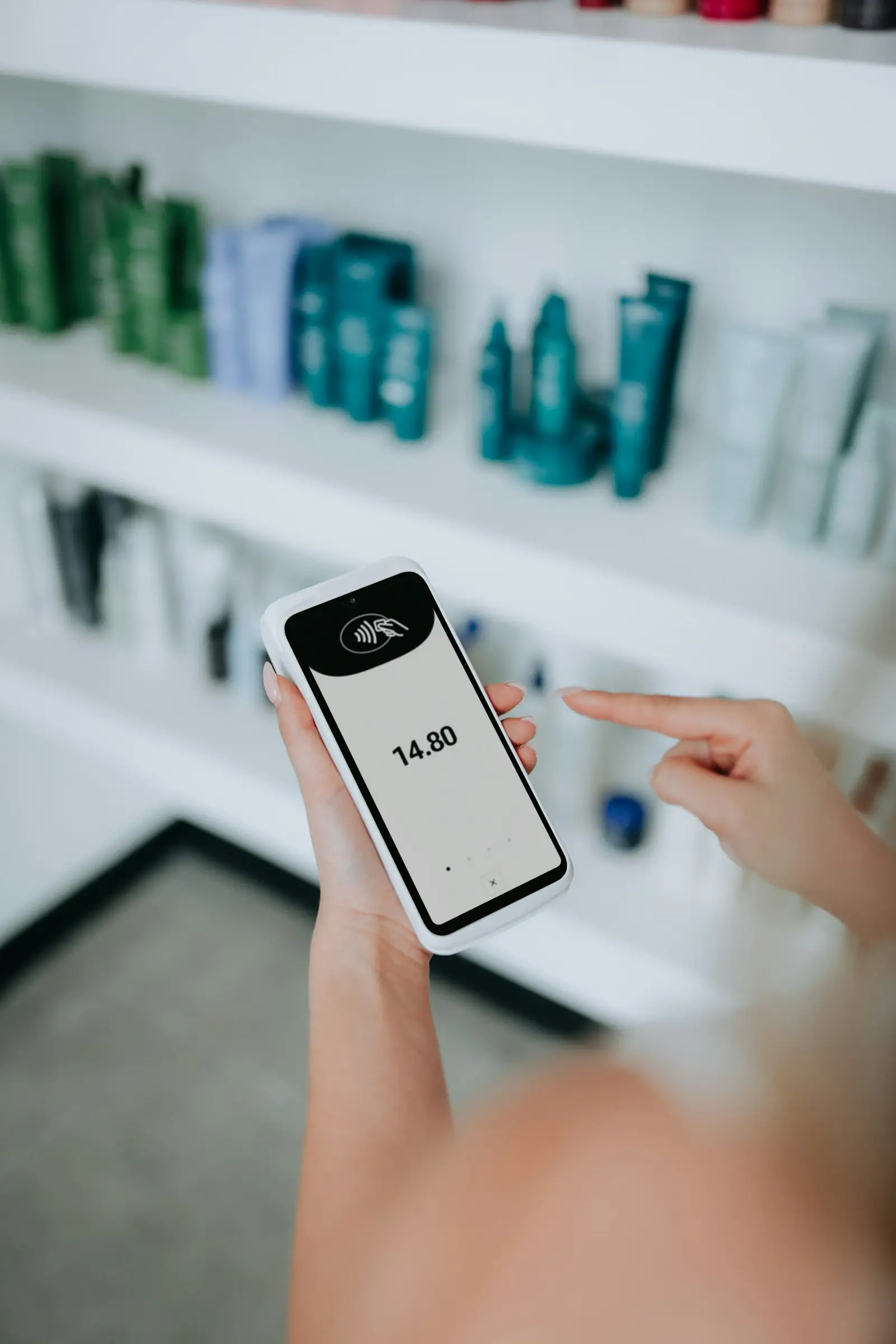 Checkout friction is one of the biggest drivers of abandoned carts.
A reference architecture for mobile money integration
For an SME or mid-sized business, a sound integration looks like this:
 Customer phone
      |
      | (PIN prompt / Paybill payment)
      v
 Mobile money provider (Safaricom Daraja, Airtel, MTN)
      |                         ^
      | callback (HTTPS POST)   | API request (STK Push, B2C, query)
      v                         |
 +--------------------------------------------+
 | Payments service (server-side only)         |
 |  - stores request IDs and raw callbacks     |
 |  - idempotent processing                    |
 |  - status query for missing callbacks       |
 +--------------------------------------------+
      |                    |
      v                    v
 ERP / accounting      Notifications
 (invoice matched,     (SMS, email, POS
  eTIMS invoice)        screen "paid")
      |
      v
 Daily reconciliation job against provider statement
The non-negotiables are:
- API credentials live only on the server, never in a mobile app or browser.
- Every outbound request and inbound callback is stored raw before processing.
- Processing is idempotent, so a duplicate callback cannot credit an account twice.
- A scheduled job queries the status of transactions whose callbacks never arrived.
- A daily reconciliation compares your ledger with the provider's statement and flags differences.
For the mechanics of card and multi-method checkouts, see understanding payment gateway integration.
Operational realities in East Africa
- Network and callback delays: Callbacks can arrive late or not at all during provider incidents. Design your user experience for "pending" states and use status queries rather than assuming failure.
- Power and connectivity at branches: If your POS depends on a cloud callback to show "paid", a branch on flaky LTE needs a fallback such as a secondary link or a supervisor-verified manual confirmation that is reconciled later.
- Customer support load: Wrong account numbers, double payments and reversals generate support tickets. Give staff a search tool across payment records by phone number, receipt number and amount.
- Data protection: Phone numbers and names in payment records are personal data under the Kenya Data Protection Act 2019. Register with the Office of the Data Protection Commissioner where required, limit access, and set retention periods. Mask phone numbers in dashboards that do not need them.
- Regulation: Payment service providers are regulated by the Central Bank of Kenya under the National Payment System Act. If you plan to hold customer funds or act as an aggregator, take legal advice before building.
Common mistakes
- Trusting SMS screenshots or forwarded messages as proof of payment. Only API callbacks or the provider statement are authoritative.
- Using a Till where you need references. Retrofitting Paybill after thousands of customers have learned your till number is painful.
- Putting API keys in a mobile app or front-end JavaScript. Anyone can extract them.
- No handling for duplicates and reversals. Providers can resend callbacks and transactions can be reversed; your ledger must cope.
- Treating "pending" as "failed". Customers who were charged but saw an error will pay again, and you will spend days on refunds.
- One-person control over B2C payouts. Outgoing payments need maker-checker approval and limits.
- Ignoring other wallets. In some segments and in neighbouring countries, excluding Airtel Money or MTN MoMo excludes real customers.
FAQ
Should my business use a Till or a Paybill number?
Use a Till for walk-in retail where each payment is a one-off purchase. Use a Paybill when you need to know which customer, invoice or account a payment relates to, such as fees, rent, subscriptions or credit sales. Many businesses run both.
Do I need a developer to integrate M-Pesa?
For direct integration with Safaricom's Daraja API, yes: you need a server, a secure public HTTPS callback endpoint and someone who can maintain it. Alternatively, many accounting, POS and e-commerce platforms offer ready-made M-Pesa connectors, which suit simpler needs.
Can customers on Airtel Money pay my M-Pesa till?
Person-to-person transfers between networks have been possible since 2018, but merchant-level interoperability has evolved separately. Check current capabilities with Safaricom and Airtel; if Airtel customers matter to you, a separate Airtel Money merchant account is the dependable option.
How do I accept mobile money from Uganda and Tanzania?
Each country requires its own provider relationship, typically with MTN, Airtel or Vodacom locally, or through a regional payment aggregator. Expect different APIs, settlement currencies and compliance requirements per country.
Is mobile money data covered by the Data Protection Act?
Yes. Phone numbers, names and transaction histories identify individuals, so the Kenya Data Protection Act 2019 applies to how you collect, store, share and retain them.
How TechBytes can help
TechBytes EA designs and builds payment integrations for Kenyan businesses, from STK Push checkouts to automated Paybill reconciliation feeding your ERP and eTIMS invoicing. We handle the server-side engineering, callback security and reconciliation jobs that keep collections accurate. If you are planning a new checkout or want to stop reconciling statements by hand, talk to our software development team or request a quote.